
It’s 2026, and while the world has moved on from pandemic bread-baking, the nerdy realm of computer role-playing games (CRPGs) only got mightier. These digital dungeons haven’t aged like stale pizza; they’ve evolved, pulling players back in with gripping stories and the illusion that your choices truly matter (they do, until you reload a save).
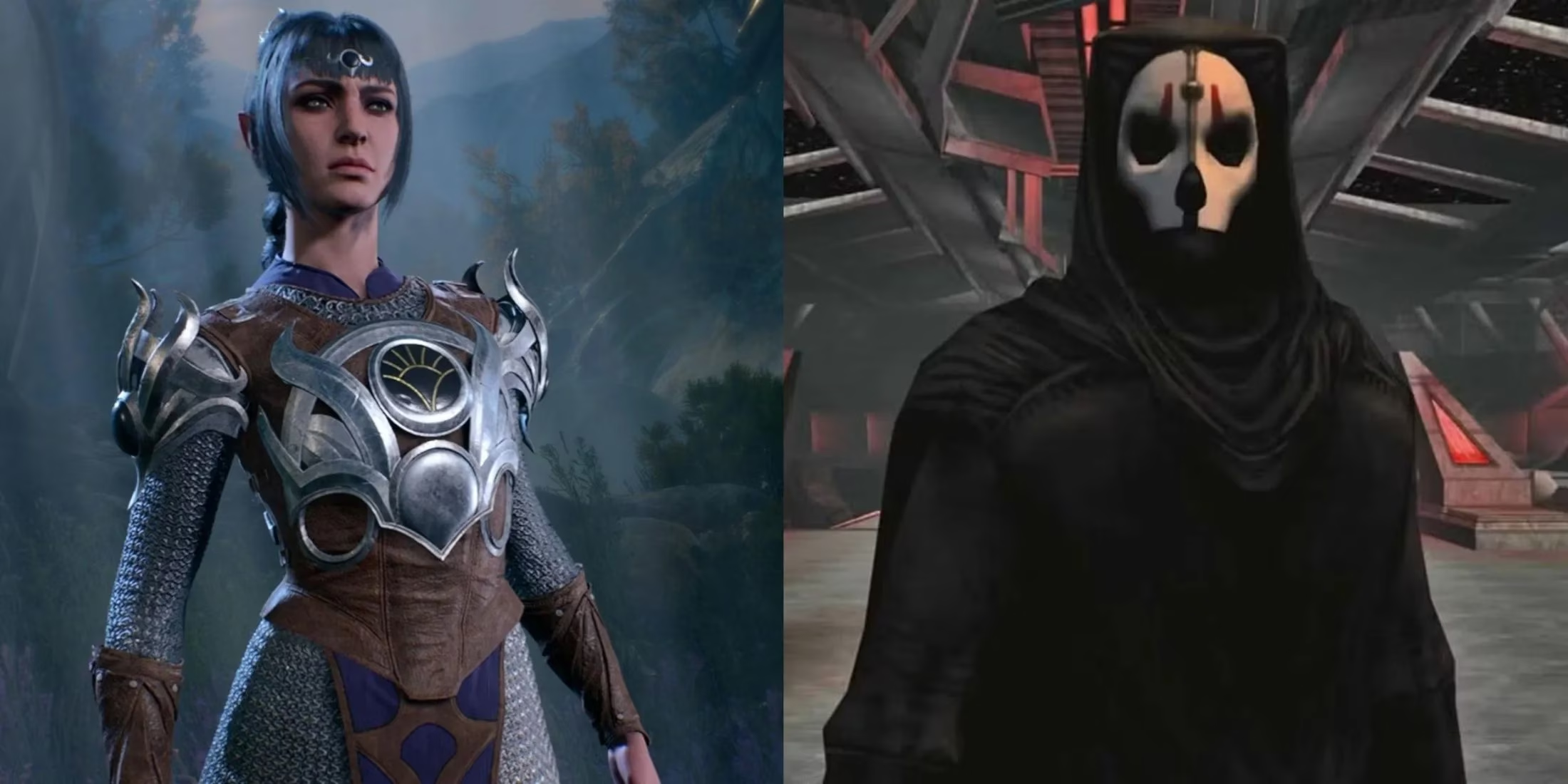
Baldur’s Gate: The Undisputed God-Emperor of CRPGs 🛡️
No franchise sits on a throne quite so comfortably. From battling mind flayers in the original saga to reuniting with that infuriatingly charming vampire in Baldur’s Gate 3, Larian’s magnum opus cemented the series’ legacy. In 2026, Baldur’s Gate 3 remains a cultural phenomenon — modders have added entire romanceable furniture sets, and the community still debates whether giving the brain-eating space worm a snack was a moral failing. It’s Dungeons & Dragons without the scheduling conflicts. The freedom to telekinetically hurl a goblin at another goblin while a sassy imp critiques your outfit? That’s not just gaming; that’s art.
Fallout: A Post-Apocalyptic Punchline Before the FPS Craze ☢️
Long before a certain vault-dwelling son demanded our attention with a chirpy “Hey, a settlement needs your help!”, Fallout was a grim parody served on a CRPG platter. The original isometric entries dripped with dark humor and allowed so much freedom that you could talk your way out of almost anything — or into a cannibalistic wedding reception. It’s a world where sarcasm is a survival skill, and the retro-futuristic aesthetic makes you feel nostalgic for a future that never happened. The moral choices actually matter, and even in 2026, fans still argue whether blowing up Megaton was justified or just extremely entertaining.
Shadowrun: When Cyberpunk Met a Spellbook 🧙♂️💾
If you think neon-drenched streets and punk hackers couldn’t possibly mix with elves and fireballs, Shadowrun laughs at your limited imagination. This series blends amoral corporations with ork shamans, offering tactical combat where a well-placed lightning bolt might short-circuit a robot — and your opponent’s day. In 2026, it remains the definitive fantasy-cyberpunk cocktail, served cold in the sprawl of Berlin or Seattle. Whether you’re a decker slipping through ICE or a street samurai with wired reflexes, the fusion of tradition and technology feels more relevant than ever.
Divinity: Original Sin — Larian’s Pre-Fame Sorcery 🔥
Before Larian became the darling of the RPG world, they were busy letting players turn rain into electrified death traps. Divinity: Original Sin 2 elevated environmental manipulation to an art form. In 2026, veterans still brag about defeating entire boss encounters by teleporting their enemies into a pile of explosive barrels and sneezing in their direction. The game’s physics-based chaos, combined with deeply interactive narratives and origin characters who bicker like old married couples, ensures it never gets old. It remains the benchmark for sandbox-style tactical depth.
Pathfinder: When You Absolutely Must Have 25 Subclasses 📜
Owlcat Games looked at the tabletop Pathfinder’s rulebook — a tome thick enough to concuss a troll — and said, “Yes, we’ll digitize that.” The result is Kingmaker and Wrath of the Righteous, two behemoths that let you micromanage crusades, romances, and whether your tiefling sorcerer should dip into a dragon disciple. Real-time with pause or turn-based? You get both. It’s like ordering a pizza with everything, twice, then realising you can also become a demon lord mid-bite. Even in 2026, the sheer breadth of character builds makes rerolling an addiction, not a choice.
Wasteland: The OG Apocalypse That Spawned Fallout 🏜️
Before there were vaults, there was Wasteland. This franchise is the gritty grandparent of post-apocalyptic CRPGs, and it still kicks radioactive ass. Wasteland 3, with its snow-covered Colorado and eccentric cults, proved that the series hadn’t lost its bite. By 2026, its satirical take on 1980s America continues to charm, reminding us that synth-heavy music and tactical shootouts never go out of style. Moral conundrums here don’t have clean answers — just ask the clone you might have adopted, or the gang of murderous cyborg Santas you just allied with.
Pillars of Eternity: The Soulful Return to Form 👁️
When Kickstarter wanted to revive the classic CRPG, Obsidian delivered Pillars of Eternity, a game so nostalgic it practically required a CRT monitor. Yet it brought its own flavour — like soul-reading detectives and a pantheon of deeply flawed gods who argue like a dysfunctional family dinner. By 2026, the franchise stands as a love letter to the genre, now with a very vocal sub-community that roleplays diplomatic pacifist routes determined to avoid all combat (bless their patient hearts). The sequel’s nautical theme added swashbuckling and the ever-important question: will this choice anger a reincarnated dragon, or just your ship’s cook?
Star Wars: Knights of the Old Republic — The Force was With This One 🌟
It’s impossible to mention CRPGs without paying homage to KOTOR. That shocking twist? Still discussed in hushed, reverent tones. In 2026, with the remake looming like a Sith Lord’s promise, the original remains a masterclass in moral storytelling: will you pet the gizka or slaughter a room full of them? Perfection. The characters — from the loyal Cathar Juhani to the delightfully homicidal HK-47 — are etched into gamer souls. Lightsaber flourish aside, the real magic was importing all your dark side decisions into the sequel and watching the galaxy burn, one corrupted apprentice at a time.
These series aren’t just games; they’re sprawling sagas that have taught players that diplomacy can occasionally be replaced by a well-aimed fireball (or a sarcastic quip). In 2026, they continue to inspire, frustrate, and consume every last hour of our free time — and we wouldn’t have it any other way.