
In the ever-evolving world of Baldur's Gate 3, the Cleric class remains a cornerstone of party composition, a versatile support pillar capable of turning the tide of battle. As of 2026, with the full suite of post-launch updates integrated, players have access to eight distinct Divine Domains, each offering a unique theological and tactical approach to adventuring. Choosing a subclass is more than a flavor decision; it dictates a character's role, from a stalwart frontline healer to a master of elemental devastation or shadowy manipulation. This analysis delves into the strengths, specializations, and strategic niches of each Cleric Domain, providing a roadmap for players seeking the perfect divine conduit for their party.

8. Knowledge Domain: The Cerebral Architect
Mystra, Oghma, Moradin, Selune
The Knowledge Domain operates like a master librarian in a world of brawlers, excelling in the intricate dance of social and intellectual encounters rather than raw combat. At its core, this subclass is an out-of-combat powerhouse. Its Level 1 Blessing of Knowledge grants proficiency and doubles the proficiency bonus for two skills from Arcana, History, Nature, or Religion, making skill checks trivial. This utility is a scalpel in a game often won with broadswords.
The true genius unfolds at Level 2 with Channel Divinity: Knowledge of the Ages. This ability allows the cleric to become proficient in every skill associated with a chosen ability score until the next long rest. Need to sneak, pick locks, and tumble? Choose Dexterity. Require silver-tongued persuasion and intimidating presence? Charisma is your key. This flexibility is unparalleled for navigating the game's dense narrative web. By Level 6, the Read Thoughts Channel Divinity pairs exquisitely with their domain spells—Calm Emotions, Confusion, and Dominate Person—allowing the Knowledge cleric to become a puppeteer of minds, controlling conflicts before blades are even drawn.
However, this Domain presents a statistical conundrum. Its features favor Intelligence for skill mastery, while its spellcasting relies on Wisdom. This split focus makes it a tricky build, less suited for beginners but potentially brilliant in the hands of a player who views every conversation and exploration sequence as a battlefield to be won with wit.
7. Light Domain: The Purifying Beacon
Corellon Larethian, Eilistraee, Helm, Lathander

The Light Domain is a radiant artillery piece, specializing in fiery and luminous destruction. It gets a host of excellent offensive spells early, including Burning Hands at Level 1 and the iconic Fireball at Level 5. It also offers utility with spells like Faerie Fire and Daylight. Its defining combat feature is the Level 2 Channel Divinity: Radiance of the Dawn, which unleashes a burst of radiant damage (2d10 + cleric level), acting like a divine flashbang that is particularly devastating against the undead swarms of Act Two.
To offset their limitation to medium armor, Light clerics possess Warding Flare, a reaction that imposes disadvantage on an attacker. Yet, this defense often feels like a paper shield against the game's heavier hitters. The subclass's offensive power comes at the cost of durability, a trade-off that leaves it slightly weaker than other martial-oriented domains. While a Tempest or War cleric can deliver comparable damage without feeling as fragile, the Light Domain remains a compelling choice for players committed to the theme of a purifying, sun-blessed zealot.
6. Trickery Domain: The Master of Misdirection
Garl Glittergold, Lolth, Shar, Tiamat, Tymora
The Trickery Domain is the party's spy and saboteur, a subclass that can be difficult to master but offers immense creative potential. Its main focus is stealth, deception, and psychological warfare. With permanently prepared spells like Disguise Self and Seeming, alongside potent control spells such as Polymorph, Dominate Person, and Fear, a Trickery cleric can manipulate entire encounters without rolling a single attack.
Their Channel Divinity, Invoke Duplicity, summons an illusory double that distracts enemies, granting advantage on attack rolls for allies positioned correctly. Perhaps its most underrated feature is the Level 1 Blessing of the Trickster, which grants an ally advantage on Stealth checks—a godsend for heavily armored companions who clank like a bag of pots and pans. In the right party, a Trickery cleric is the invisible hand that guides fate, setting up perfect ambushes and turning enemies against each other.
5. Nature Domain: The Elemental Warden
Eilistraee, Mielikki
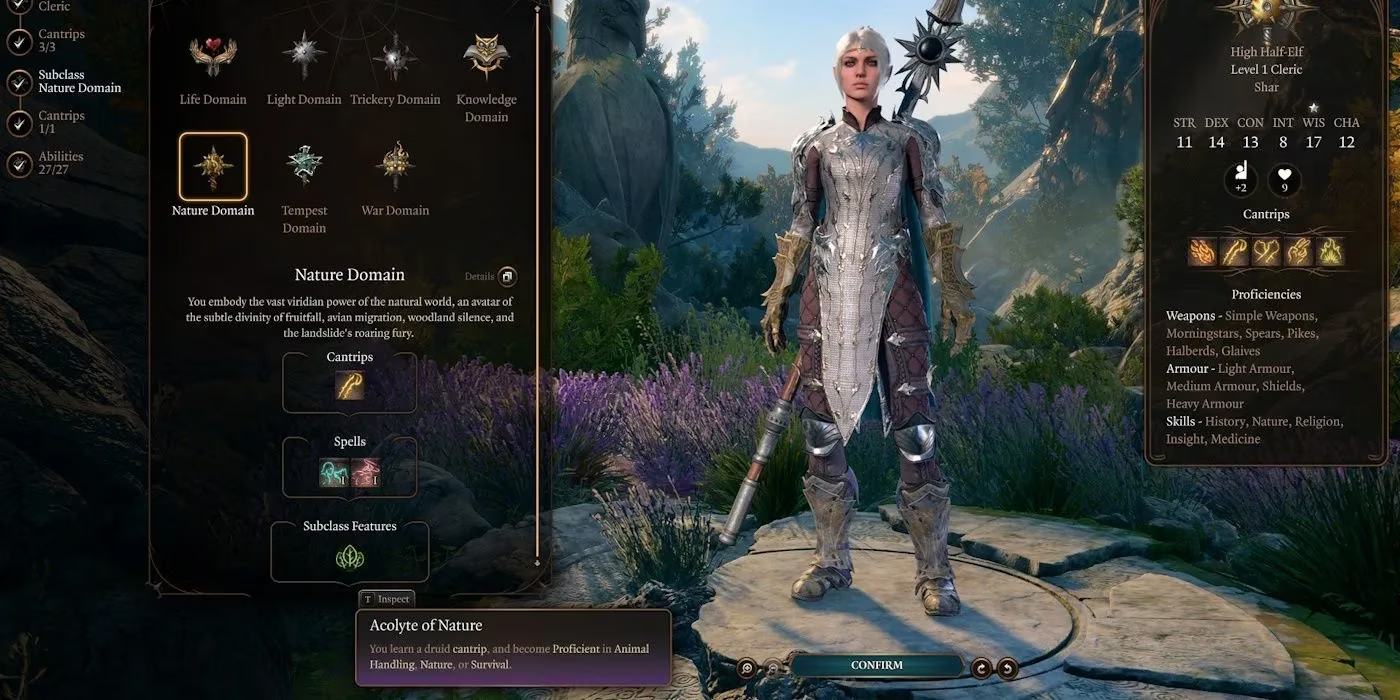
Blending the primal magic of the Druid with the sturdy support of the Cleric, the Nature Domain is a versatile elementalist. At Level 1, they learn a Druid cantrip and gain a skill proficiency, with Speak with Animals permanently prepared—a boon for any party wishing to converse with the Faerûn's fauna. While their first Channel Divinity (charming plants and beasts) is situational, their Level 6 ability, Dampen Elements, is a game-changer. It allows the cleric to use a reaction to halve acid, cold, fire, lightning, or thunder damage dealt to an ally, providing crucial defensive utility.
At Level 8, Divine Strike: Elemental Fury adds 1d8 cold, fire, or lightning damage to weapon attacks each turn. This Domain excels at both mitigating and dealing elemental damage, offering a playstyle akin to a Druid but clad in heavy armor and backed by the Cleric's robust spell list. It's a resilient, adaptable subclass for those who want to command the forces of nature without forsaking martial prowess.
4. War Domain: The Divine Strategist
Bahamut, Corellon Larethian, Gruumsh, Lolth, Tempus, Tyr

The War Domain is the embodiment of divine martial prowess, a commander whose presence on the front line bolsters the entire party. Its core feature, War Priest, allows the cleric to make an additional weapon attack as a bonus action several times per long rest, significantly boosting their damage output. With proficiency in heavy armor and martial weapons, they are formidable from the game's earliest levels.
Their Channel Divinity abilities are precision tools for ensuring attacks land. Guided Strike (Level 2) adds a +10 bonus to an attack roll, which is upgraded at Level 6 to War God's Blessing, allowing the cleric to grant this massive bonus to an ally's attack as a reaction. This makes the War cleric an incredible force multiplier, capable of guaranteeing critical hits for themselves or their allies at the most opportune moments.
3. Death Domain: The Necromantic Sovereign (Patch 8 Addition)
Kelemvor, Laduguer

Introduced in Patch 8, the Death Domain is a specialist in necromancy and undeath, a subclass that spreads decay like a blight across a field. It gains potent necromancy cantrips like Chill Touch and Ray of Sickness at Level 1. Its Reaper ability allows these single-target necromancy cantrips to strike a second, adjacent enemy, effectively doubling their output in clustered fights.
At Level 2, Channel Divinity: Touch of Death infuses attacks with extra necrotic damage. This theme of unstoppable decay is cemented at Level 6 with Inescapable Destruction, which makes the cleric's spells ignore resistance to necrotic damage. By Level 8, Divine Strike: Necrotic adds further rotting power to melee attacks. Armed with high-level spells like Animate Dead, Blight, and Cloudkill, a Death Domain cleric becomes a general of a shambling legion, weakening foes with persistent damage and debilitating conditions. Their power is a relentless tide, eroding enemy health bars with supernatural efficiency.
2. Tempest Domain: The Storm's Wrath
Gruumsh, Talos
The Tempest Domain is the avatar of meteorological fury, a master of lightning and thunder damage whose offensive output can surpass even the War Domain. Protected by heavy armor, their Level 1 feature, Wrath of the Storm, allows them to retaliate when hit with a burst of 2d8 lightning or thunder damage.
The true spectacle is their Level 2 Channel Divinity: Destructive Wrath. This ability allows the cleric to deal maximum damage on lightning or thunder damage rolls. When combined with a spell like Call Lightning or Chain Lightning, the results are catastrophic, capable of deleting enemy groups in a single, thunderous clap. At Level 8, Divine Strike: Tempest adds 1d8 thunder damage to weapon attacks and can push enemies back. A Tempest cleric is a walking natural disaster, a DPS powerhouse that also provides solid party support.
1. Life Domain: The Unbreakable Bulwark
Bahamut, Corellon Larethian, Helm, Ilmater, Lathander, Selune, Yondalla

Topping the list is the Life Domain, the quintessential healer and the most reliable support subclass in Baldur's Gate 3. Clad in heavy armor and wielding the best healing capabilities, a Life cleric ensures a party's longevity through the most brutal encounters. With spells like Cure Wounds, Revivify, and Death Ward always prepared, allies are kept fighting against all odds.
Their healing is supercharged from Level 1 with Disciple of Life, which adds 2 + the spell's level to any healing spell's output. At Level 2, Channel Divinity: Preserve Life provides a substantial area-of-effect heal. By Level 6, Blessed Healer allows the cleric to heal themselves whenever they heal others, making them incredibly durable. In a game where a single failed death saving throw can spell disaster, the Life Domain cleric is the ultimate insurance policy. They are the steadfast anchor of any party, the reason victory is always within reach, turning near-defeats into triumphant stands. Their role is as timeless as it is essential: they are the beating heart that keeps the party's body alive.