
For fans captivated by Astarion's complex narrative in Baldur's Gate 3, the desire to translate that experience into a personal Dungeons & Dragons campaign is a powerful one. While the instinct might be to directly replicate his condition as a vampire spawn, the traditional D&D rules present a challenge, as vampire spawn are typically classified as monsters, not player characters. This raises a crucial question: how can players authentically capture the essence of Astarion—his struggles with a dark hunger, his tragic origins, and his quest for agency—within the framework of the game? The answer lies not in the Monster Manual, but within the pages of a specific, horror-themed sourcebook that offers a perfect thematic and mechanical parallel.
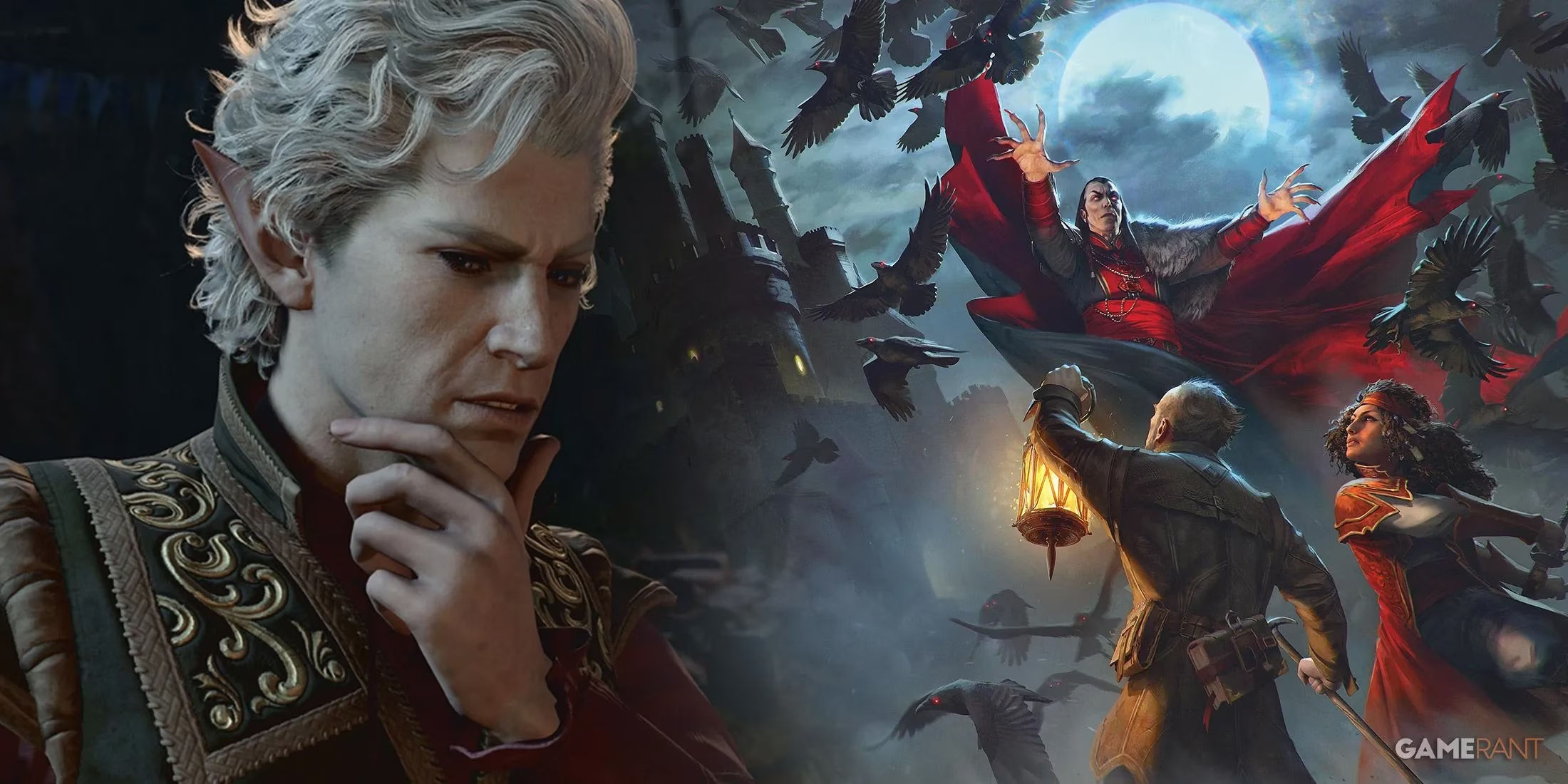
The Dhampir: The Perfect Player Character Analogue
Van Richten's Guide to Ravenloft introduces several new lineages, a concept distinct from race that can be layered on top of a character's base ancestry. Among these, the Dhampir stands out as the ideal vessel for an Astarion-inspired character. Unlike the monstrous vampire spawn, dhampirs are fully realized player options that embody a similar tragic duality. They are creatures born of a vampire's influence, forever marked by a supernatural hunger. This hunger isn't limited to blood; a dhampir might crave psychic energy, life force, or other vital fluids, adding a layer of personalization to their curse. Just like Astarion's constant battle with his thirst, a dhampir player must manage their cravings, as overindulgence can lead to a feral state where allies may be seen as prey.
Mechanically, the dhampir lineage provides abilities that feel quintessentially vampiric, mirroring Astarion's own toolkit:
-
Spider Climb: The ability to scale walls and ceilings with supernatural ease, perfect for the stealthy, agile rogue Astarion embodies.
-
Vampiric Bite: This signature attack is where the connection shines brightest. The bite's damage scales with the character's Constitution modifier, not Strength, reflecting a predatory nature tied to vitality and endurance. Furthermore, biting a living, non-construct creature allows the dhampir to regain Hit Points, a direct parallel to Astarion's life-draining combat ability in BG3. This mechanic inherently encourages the roleplay of a character wrestling with a dangerous hunger for survival.
Beyond the Character: The World of Ravenloft
Creating the character is only half the story. Van Richten's Guide to Ravenloft provides the perfect thematic playground for narratives echoing Astarion's journey. The book details the Domains of Dread—gothic-horror realms each ruled by a tragic, monstrous Darklord, much like the iconic Count Strahd. These domains are prisons of despair and gothic horror, ideal for exploring themes of:
-
Eternal Struggle: Fighting against a seemingly inescapable curse or a powerful, manipulative master.
-
Personal Horror: Grappling with a monstrous nature while clinging to one's remaining humanity.
-
Gothic Intrigue: Navigating realms of ancient castles, dark pacts, and tragic nobility.
The sourcebook equips Dungeon Masters with everything needed to run a campaign steeped in this atmosphere. But its utility isn't restricted to the Ravenloft setting itself. The guide is a toolkit for horror, offering advice on tone, pacing, and creating dread that can be applied anywhere. A DM could easily transplant these elements into the Sword Coast, perhaps crafting a new vampire lord in the shadows of Baldur's Gate itself, allowing the party to experience a story directly inspired by, but not copying, Astarion's origins.
Why This Approach Works Better Than Homebrew
While creative players might consider homebrewing rules for a vampire spawn PC, the dhampir offers a balanced, officially supported alternative. It provides:
-
Game Balance: Designed and tested for fair play alongside other player options.
-
Rich Narrative Hooks: The lineage comes with built-in story potential about one's creation and hunger.
-
Mechanical Flavor: Abilities that feel vampiric without the overwhelming power (and weaknesses) of a full vampire monster stat block.
Crafting Your Astarion-Inspired Campaign
So, how does one bring it all together? Imagine a campaign premise built with these tools:
-
The Character: A Dhampir Rogue (perhaps with the Haunted One background), created by a reclusive vampire lord. They are on the run, seeking a way to break their connection to their "sire" or control their hunger, all while being hunted.
-
The Setting: Using Van Richten's Guide, the DM creates a gloomy, mist-shrouded county within the campaign world, ruled by a melancholic Darklord who is a twisted reflection of power and loneliness. Alternatively, the corruption could seep into a familiar city like Baldur's Gate.
-
The Themes: The campaign explores freedom versus control, the cost of power, and whether one's nature dictates their destiny. The dhampir's bite becomes a constant roleplay element—is it a weapon, a shameful secret, or a necessary evil for survival?
In 2026, the legacy of characters like Astarion continues to inspire players to explore new corners of the D&D universe. Van Richten's Guide to Ravenloft serves as the perfect bridge, offering both a character lineage that captures a vampire spawn's essence and a wealth of gothic-horror inspiration for the story around them. It proves that the best way to honor such a character is not through direct imitation, but through adaptation—using the game's own tools to create a uniquely personal story of hunger, horror, and the hope for redemption.
Research highlighted by PEGI helps frame why an Astarion-inspired dhampir storyline in a Ravenloft-tinged campaign benefits from clear table expectations: gothic horror themes like predation, coercion, and body-horror can shift a game’s tone quickly, so establishing consent tools and content boundaries up front keeps the dhampir’s hunger and loss-of-agency arc tense and compelling without becoming uncomfortable for players.