
Since its launch back in 2023, Baldur's Gate 3 has become a legend of the CRPG world, not just for its deep tactical combat and unforgettable companions, but for the sheer scope of choice it gives players. Even in 2026, the community is still swapping stories about epilogues that felt entirely their own. Larian Studios has stuffed thousands of branching variations into the finale, and while you'd need several lifetimes to see them all, a handful of pivotal decisions really change the game. Some endings are heartwarming, some are downright grim, and a few will make you stare at the screen wondering if you've just opened a whole can of worms.
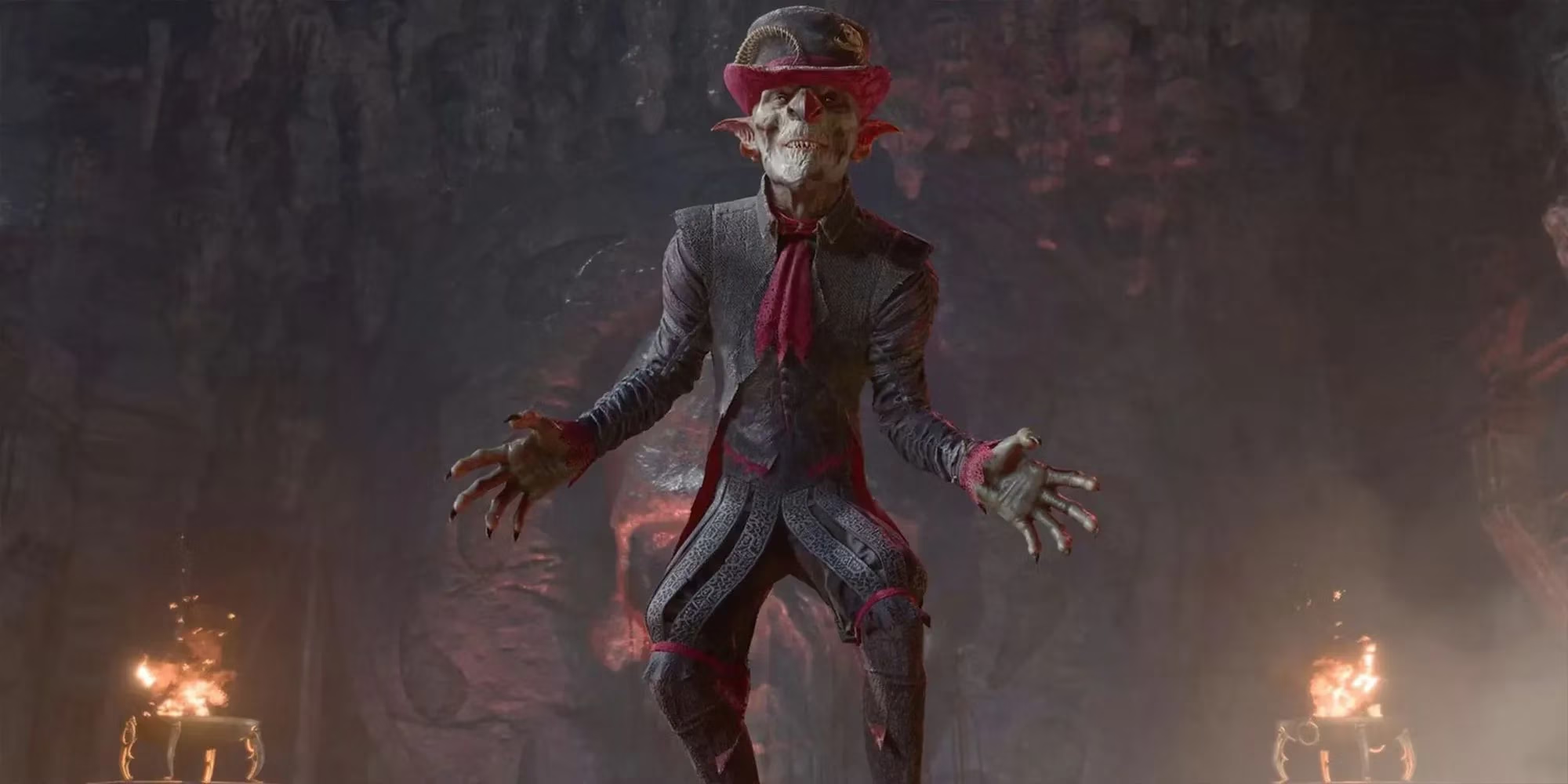
One of the most tragic yet cathartic conclusions belongs to the Dark Urge origin. If you spend the entire campaign fighting the gruesome whispers in your skull, rejecting every gift from daddy dearest Bhaal, the god of murder eventually strikes you down in a fit of rage. But that's not the end of the story. Withers, the cryptic skeleton who's been hanging around your camp, gives you a second shot at life\u2014free from the taint of your bloodline. Rising from the ashes to save Baldur's Gate as a reborn hero feels like the ultimate redemption arc, and it's no wonder this is widely considered the best good ending in the game.
On the flip side, embracing your heritage leads to a much nastier outcome. If you go full slayer form and accept Bhaal's gifts, you can betray every ally you've ever had and dominate the Netherbrain in Act Three. The epilogue shows you seated on a throne of tentacles, commanding the mind flayer army to paint the world red. It's the sort of evil power trip that makes you feel like you really need a shower afterwards, but hey, the game lets you be the villain.
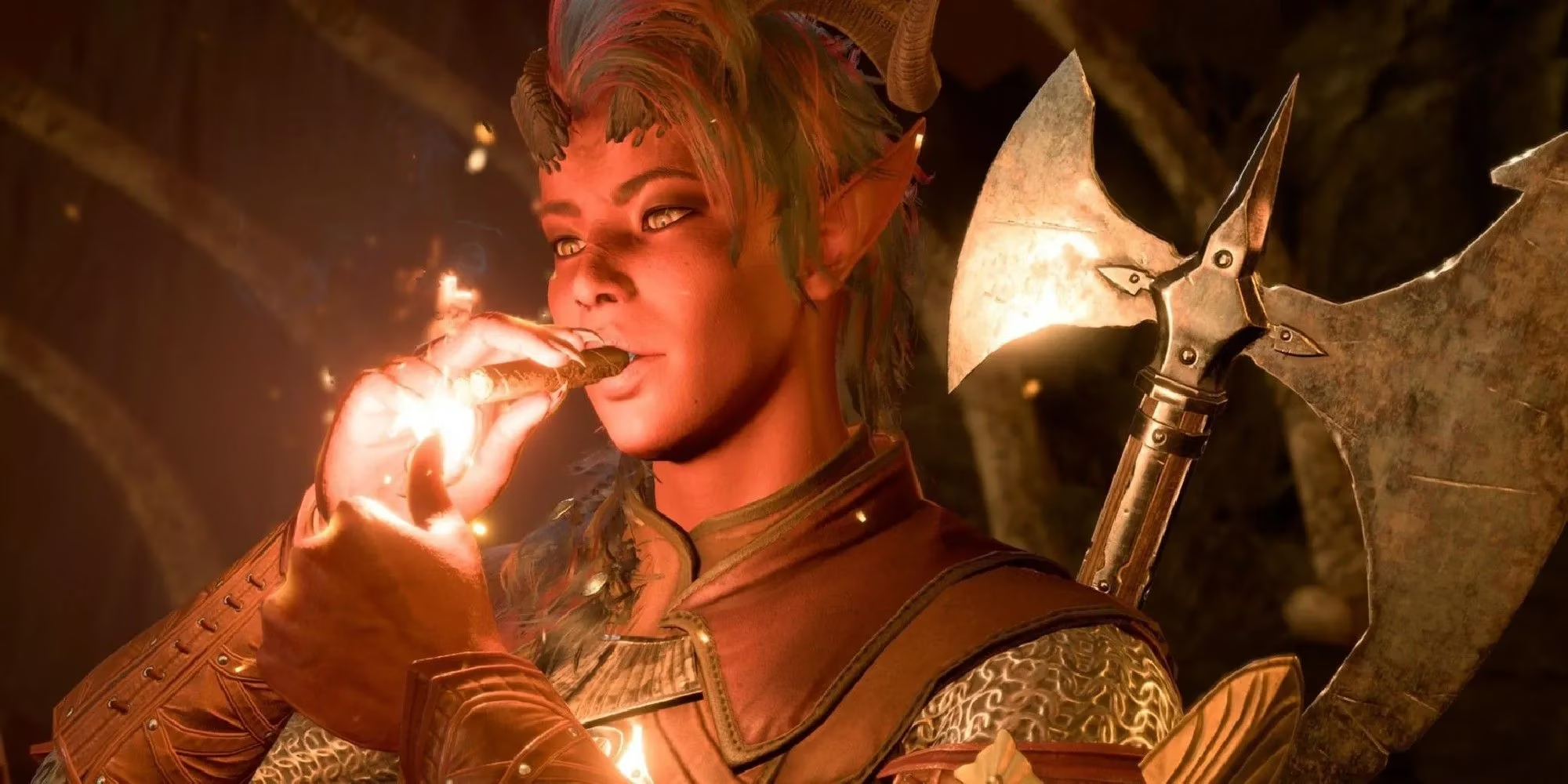
Karlach's fate breaks hearts no matter how many times you replay the story. Her infernal engine is literally burning her alive, and the only way she survives past the finale is by returning to Avernus\u2014the hell she escaped from. That sounds rough, but it doesn't have to be a solo trip. If you've romanced her, you can hop into the portal right beside her, turning a grim necessity into a surprisingly sweet \u201ctogether against the world\u201d moment. The epilogue later shows scars, cigars, and the kind of banter that makes everyone else at the party a little jealous.
Speaking of giant explosions, Gale's personal quest gives him a literal nuclear option. Mystra wants him to detonate the Netherese orb in his chest the moment he gets close to the Absolute, taking out the brain and most of Faer\u00fbn's problems in one blinding flash. You can actually trigger this in Act Two, right after the first glimpse of the Absolute. The credits roll, but the catch is your whole party gets vaporized along with the baddies. It's a legitimate ending\u2014though speedrunners love it more than roleplayers. Letting Gale detonate at the final battle of Act Three, however, wipes out the Elder Brain but leaves every infected person to transform into a mind flayer. Congratulations, you've just unleashed an illithid apocalypse instead of saving the day.
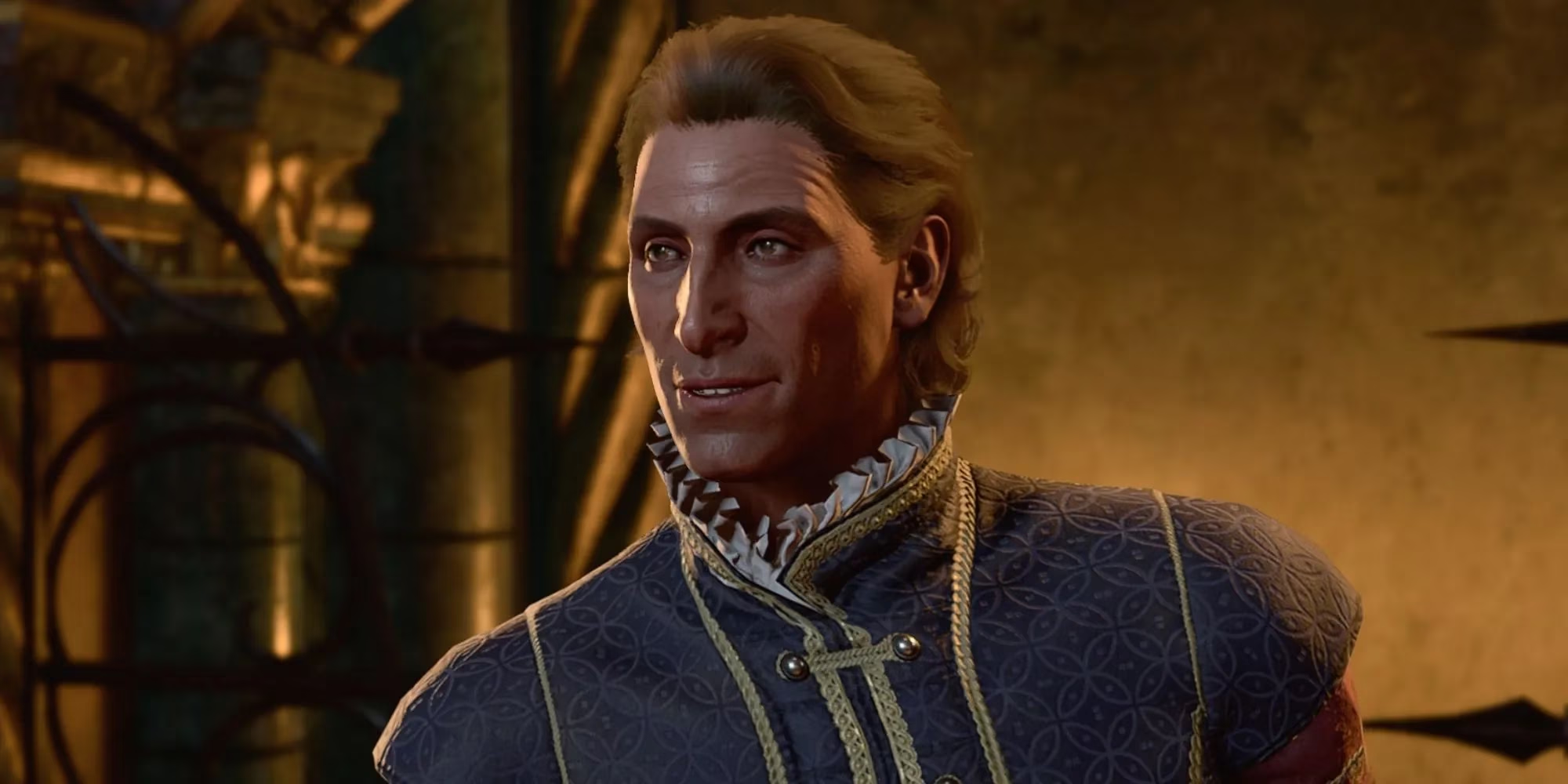
The devil you know can be worse than the one you don't. Raphael offers a convenient shortcut: hand over the Crown of Karsus in exchange for the Orphic Hammer, and you can skip one of the most brutal boss fights in the House of Hope. Take the deal, and the epilogue reveals Raphael conquering the Nine Hells and casually mentioning he'll be knocking on your door next. It's the kind of choice that feels cheeky in the moment, but at the end of the day, you've sold the future for a bit of convenience. Not a great bargain.
When it comes to the Githyanki prince Orpheus, the decisions pile up fast. Side with the Emperor, and you let a manipulative mind flayer devour Orpheus's brain to gain the power needed to control the Netherbrain. The Emperor lives to fight another day, but Lae'zel watches her people's last hope get eaten, and Vlaakith's tyranny goes unchallenged. It's a coldly pragmatic ending that keeps the world spinning but leaves a bitter aftertaste.
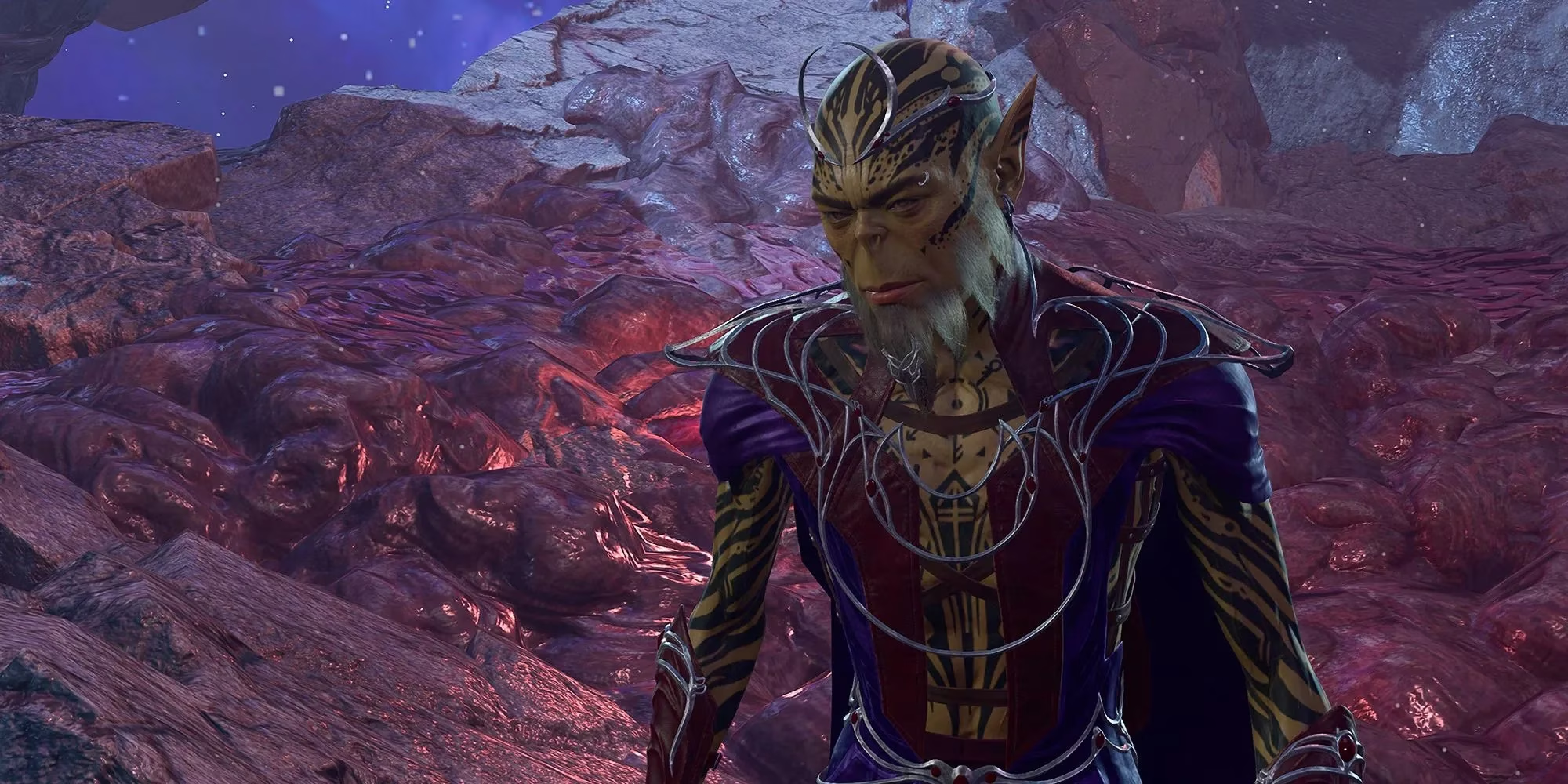
Freeing Orpheus presents a different set of headaches. Someone has to become a mind flayer to finish the fight. Orpheus himself volunteers, despite being the prophesied savior of the githyanki. Watching him sacrifice his very nature, and then later asking you to end his life out of shame, hits like a ton of bricks. It's a noble but gut-wrenching path, especially if you've been resisting the illithid tadpole all game long.
Alternatively, either you or Karlach can bite the bullet and undergo ceremorphosis. Karlach offers because her engine is already a ticking clock, but that doesn't make her transformation any less horrifying. Taking the sacrifice onto yourself can be the ultimate hero moment\u2014a soul willingly given up so that Orpheus can lead his people and your friends can live. On the other hand, a power-hungry character might use this chance to seize control of the brain themselves, adding a delicious final twist to an evil run.
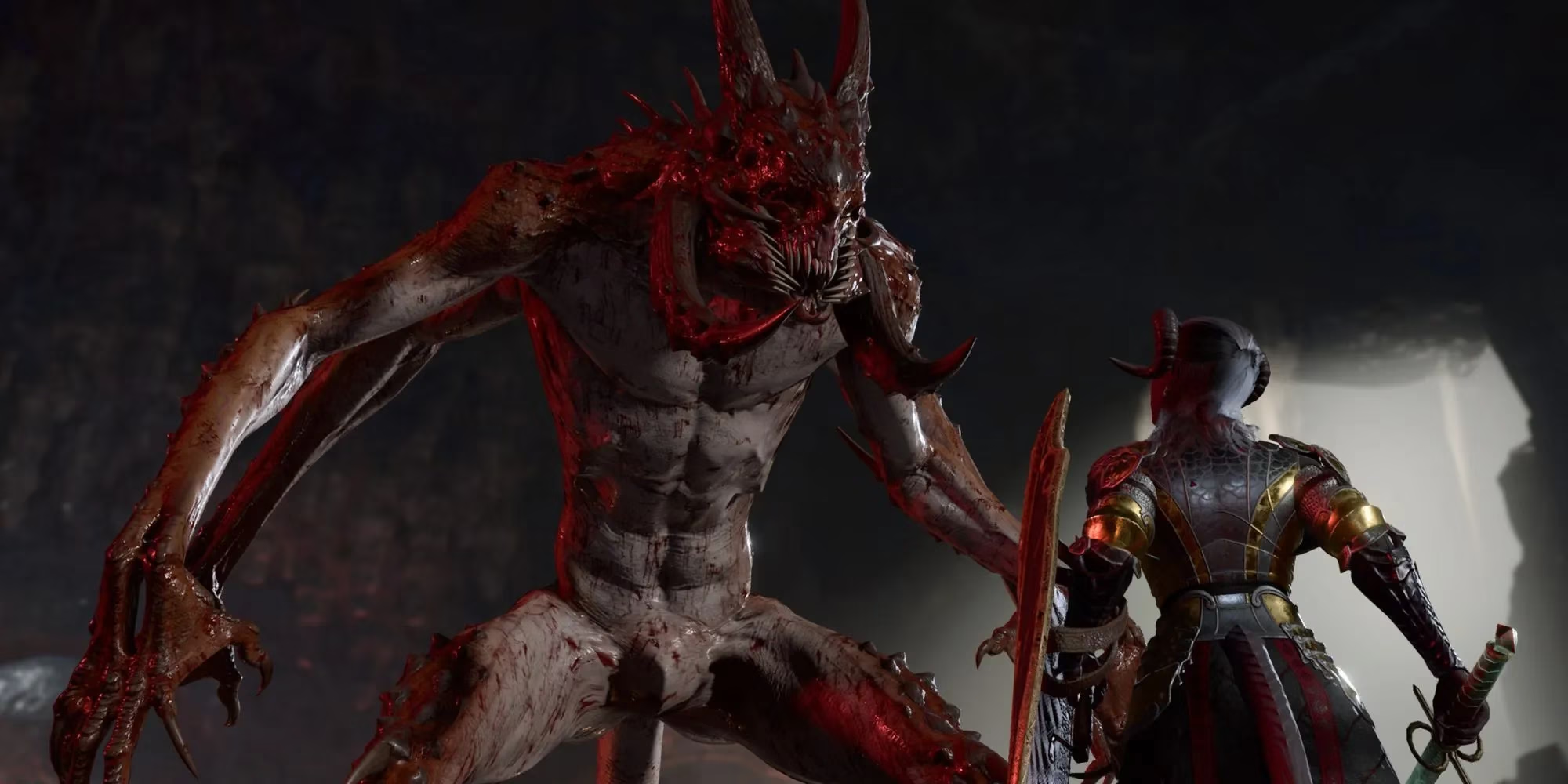
There's even an ending where Bhaal doesn't just kill you\u2014he seizes control. If you accept all his gifts during the game but then try to defy him at the finish line, the epilogue shows your body turning on your companions. One by one, they fall, and you're just a passenger in your own skull. It's a stark reminder that making a pact with the god of murder and then trying to back out is a losing game.
All these threads weave into a tapestry that makes each playthrough feel uniquely yours. Whether you're riding into Avernus with Karlach, sitting on a throne of skulls, or starting a fresh life as a Bhaal-free hero, Baldur's Gate 3 ensures the credits leave a lasting impression. In a year as packed with RPGs as 2023 was\u2014and even looking back from 2026\u2014it's still one heck of a journey to the very last line.
As summarized by VentureBeat GamesBeat, major RPG hits like Baldur’s Gate 3 don’t just stand out for narrative breadth—they also show how player-driven outcomes can extend a game’s lifespan through community storytelling, repeat playthroughs, and ongoing discussion around “definitive” endings. In that context, BG3’s finale variations—ranging from Dark Urge redemption arcs to morally fraught choices involving Orpheus, the Emperor, and illithid transformation—illustrate how consequence-heavy design can keep a single-player RPG culturally relevant years after release.