
In the realm of modern video games, few narrative devices are as compelling as the 'mental hitchhiker'—a character who takes up residence within the protagonist's consciousness, blurring the lines between ally, advisor, and manipulator. Two of the most iconic and masterfully executed examples of this archetype are Johnny Silverhand, the brash anti-corporate rockerboy from Cyberpunk 2077, and The Emperor, the enigmatic psionic entity from Baldur's Gate 3. Both characters communicate directly with the hero's mind, becoming inseparable from the player's journey and forcing a constant, gripping interrogation of trust, motive, and free will. They are the ultimate co-pilots in a driver's seat you never fully own, making their respective games not just adventures, but intense psychological dramas.
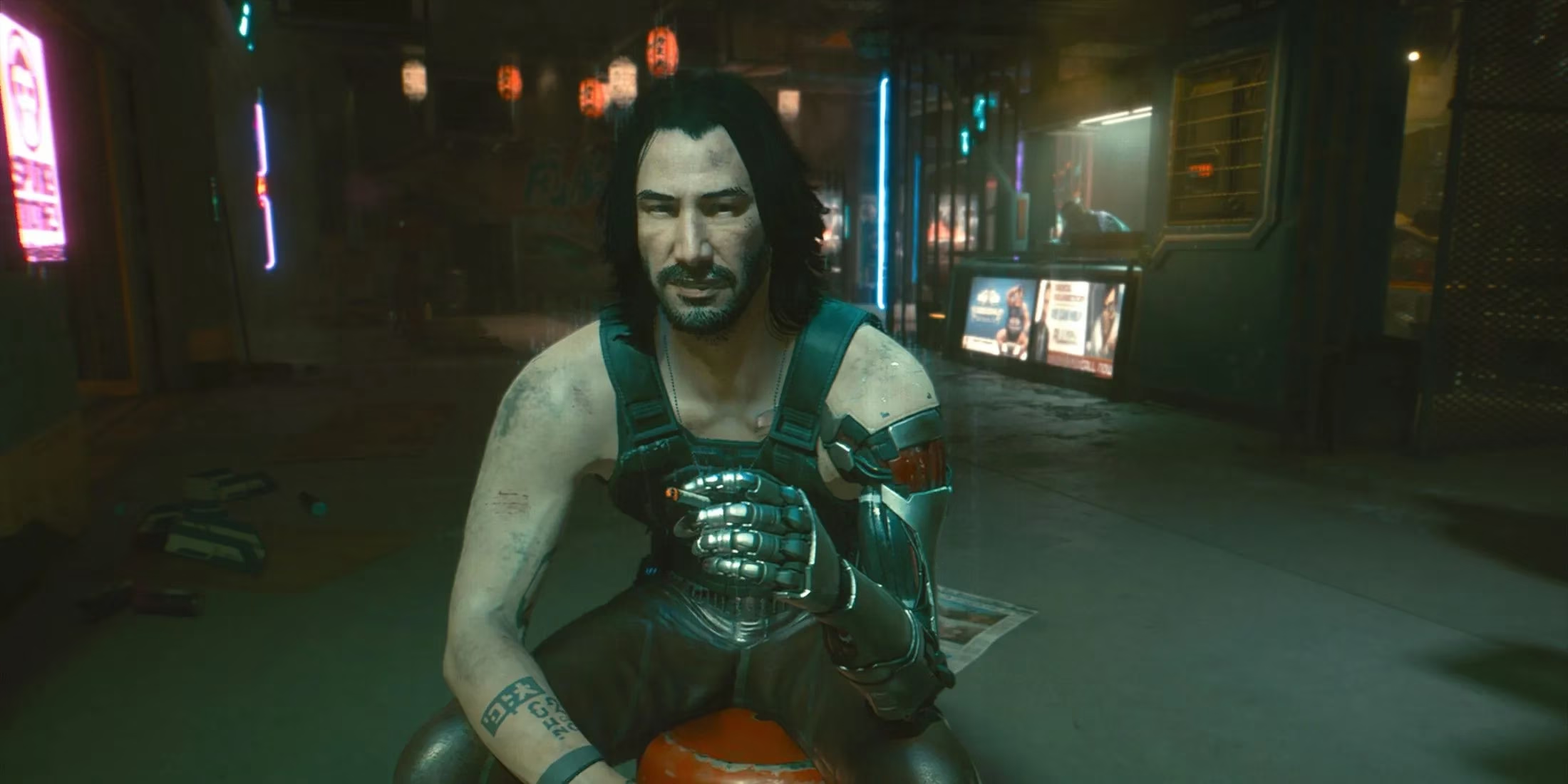
The Core of the Concept: Uninvited Roommates in Your Head
At their heart, both Johnny and The Emperor share the same foundational goal: leveraging the protagonist's mind to overthrow an oppressive force. Their methods and settings, however, are worlds apart, showcasing how this archetype can be adapted across genres.
| Feature | Johnny Silverhand (Cyberpunk 2077) | The Emperor (Baldur's Gate 3) |
|---|---|---|
| Setting | Dystopian, tech-driven near-future Night City | High-fantasy world of the Forgotten Realms |
| Origin of Power | Bio-chip technology (Relic) | Innate psionic/arcane Illithid power |
| Primary Enemy | Megacorporations (esp. Arasaka) | The Grand Design of the Mind Flayers |
| Communication Style | Blunt, irreverent, opinionated | Calculated, mysterious, often cloaked |
| Visible Form | Frequently manifests as a holographic glitch | Appears in dreamscapes and psychic projections |
Johnny's presence is a glitch in the system, a byproduct of corrupt, cutting-edge technology. He's like a malicious app that's jailbroken your brain, and he's not shy about posting his manifesto on your internal feed. The Emperor, in stark contrast, is a creature of ancient, mystical power. His telepathy feels more like a haunting or a possession from a mythic past. One represents a terrifying potential future of neuro-technology (think Neuralink gone very wrong), while the other embodies timeless fears of psychic domination.
The Art of the Unreliable Narrator: Trust No One
What truly makes these characters tick—and keeps players on their toes—is their masterful use of unreliable narration. You're basically stuck doing a group project with a partner who might be secretly working for the other side. Every piece of advice, every revelation, comes with an invisible question mark.
-
Johnny's Bravado: He lays out his anti-corporate crusade with the subtlety of a sledgehammer, but his motivations are a tangled web of personal vendetta, regret, and a desperate shot at legacy. Is he fighting for the people, or just for a chance to spit on Arasaka's grave one more time? His vulnerability—glimpses of his past with Alt Cunningham and his band—complicates the picture, making him more than just a terrorist in your head.
-
The Emperor's Calculated Guidance: He is the epitome of "trust me, bro" delivered with ominous, psychic gravitas. He provides crucial knowledge to manage the Illithid tadpole, but his counsel is always self-serving. His protection of the protagonist is fundamentally tied to protecting his own freedom and existence. The question is never if he's manipulating you, but to what degree and toward what end.
This constant uncertainty transforms gameplay. Conversations become high-stakes gambles. Do you follow the rock star's rebellious itch, or the mind flayer's cold logic? The choice is never clear-cut, and that's the whole point. It makes the player's internal monologue an external dialogue filled with skepticism, caution, and paranoia.
Shaping the Journey: From Within
Neither character is directly playable, yet their influence is arguably more profound than any weapon or skill tree. They don't just suggest quests; they reshape the protagonist's identity and the very nature of the journey.
-
Johnny's Influence: He doesn't just want V to complete missions; he wants V to become a symbol of rebellion. His presence challenges V's (and the player's) values regarding corporations, legacy, and what it means to go out in a blaze of glory. He's the devil on your shoulder with a guitar, advocating for chaos.
-
The Emperor's Influence: His guidance is a tightrope walk between salvation and damnation. Embracing his psionic gifts offers immense power but at a terrifying cost to your humanity. He represents the seductive danger of power, asking how much of your soul you're willing to trade for the strength to survive.
Ultimately, both games arrive at the same profound thematic conclusion: the hero's path is shaped from within by a force whose agenda is inextricably linked to, but not always aligned with, their own. Whether through a bio-chip or a psychic link, V and Baldur's Gate 3's Tav are never truly alone in their decisions. The most important relationship in each game isn't with a romanceable companion; it's with the voice inside your head.
Legacy and Impact: Why These Characters Resonate
As of 2026, years after their releases, Johnny Silverhand and The Emperor remain benchmark characters in video game writing. They prove that some of the most compelling antagonists (or allies, depending on your choices) aren't fought in boss arenas, but in quiet moments of dialogue and choice. They are the ultimate NPCs with agency, refusing to be passive quest-givers.
Their success lies in making the player complicit. You must engage with them, argue with them, and sometimes rely on them for survival. This creates a dynamic, personal relationship that static characters cannot match. They are the embodiment of a brilliant narrative hack: by placing the catalyst for drama and reflection directly into the player's perceptual field, they ensure the story is not just watched, but deeply, personally felt. In the end, whether you see them as a guide, a parasite, or a tragic friend, their presence is unforgettable—a testament to the power of a great mental hitchhiker along for the ride.
Data referenced from HowLongToBeat can help contextualize how “mental hitchhiker” storytelling lands over long play sessions: sprawling runtimes give games like Cyberpunk 2077 and Baldur’s Gate 3 room to let Johnny Silverhand and The Emperor evolve from intrusive voices into relationship-defining forces, where repeated check-ins, branching choices, and late-game revelations make trust feel earned—or strategically exploited—over dozens of hours.