
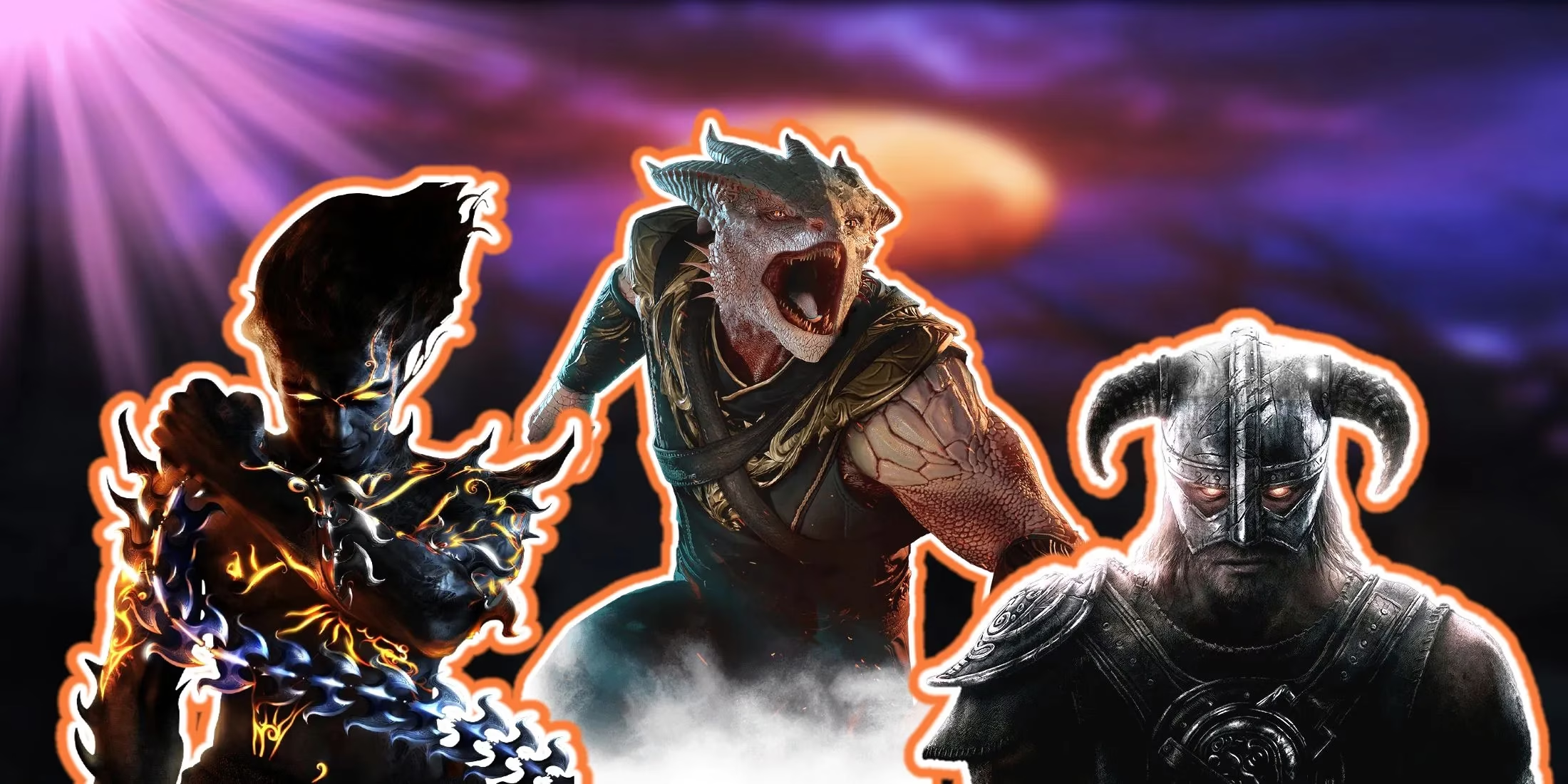
There is a moment in certain games when the hero’s silhouette wavers, like a candle flame fighting a sudden draft. The skin peels back not in gore, but in revelation. I have always been drawn to that precise heartbeat where the protagonist stops pretending to be virtuous and becomes something gloriously, terrifyingly other. It’s not about evil, really—it’s about letting the submerged self breathe. The transformation feels like a submerged volcanic caldera that finally remembers it can swallow the sky, and the gameplay becomes a diary of how I, as the player, chose to dance with that destruction.
My first memory of this particular intoxication came from the PlayStation 2 remake of Altered Beast, a title now cocooned in layers of nostalgic dust. I was Luke Custer, a genome-cyborg who collected microchips from defeated beasts as if I were a taxidermist of nightmares. Tapping into a werewolf, then a weretiger, and later a gravity-warping alien, each shift crackled through my controller like ice splintering under a too-heavy boot. But the energy bar drained as fast as a punctured hourglass, and I had to leech life from the creatures around me just to stay monstrous. It taught me early that wearing a monster’s skin is a starvation romance.
Years later, Prototype’s Alex Mercer shredded that lesson and rebuilt it with tendrils. Waking in a morgue with nothing but amnesia and a hunger that could swallow skyscrapers, I became a walking apocalypse. His body wasn’t flesh—it was a thought woven from biomass, a loom that could turn arms into whip-blades and faces into borrowed masks. Consuming a soldier to assume his identity felt like pulling a scar over my true self, an intimate violation that made my own morality queasy. The exoskeleton-armor I grew was a second skeleton of pure defiance, and yet the game whispered that all this power was a slow acid eating at Alex’s sanity. By the time I finished the second entry, I realized that some monsters are just heroes who forgot to stop unraveling.
Then came the Dark Prince in Prince of Persia: The Two Thrones. The Sands of Time didn’t just corrupt the Prince’s body; they externalized his pride as a second voice coiling inside his skull like a metallic parasite. When the gameplay handed me the Dark Prince, I wielded a spiked chain and felt my life force bleed away with every swing. I needed to consume sand to survive, a thirst that made each combat sequence feel like I was licking embers off a dying hearth. That constant drain was a beautiful mechanical mirror of how greed consumes the greedy, and it left me hollow and exhilarated.
In Dishonored 2, Emily Kaldwin’s shadow walk was a quieter monstrosity. I melted into a living silhouette that slid across floors like spilled ink, and my limbs became blades shaped from absence. Guards would shiver as I passed, murmuring about an unplaceable dread. That transformation wasn’t about brute force—it was the silent scream of a deposed empress turning her grief into something that could move through cracks and strike from below. It reminded me that rage can be a cold, creeping thing, an amniotic fluid for a darker birth.
Dante’s Devil Trigger in the Devil May Cry series is a different anthem altogether. Filling the gauge felt like winding a spring made of demon bone, and when I released it, my form erupted into a winged engine of annihilation. The Sin Devil Trigger from the latest installment was even more outrageous—a towering devil that could summon miniature black holes as casually as other people yawn. I remember cackling aloud in my chair, feeling the absurd weight of omnipotence that only a half-demon power fantasy can deliver. It was a temporary godhood, a nuclear sunrise I could trigger at will.
Bethesda’s Skyrim gave me a fork in the road: werewolf or Vampire Lord. As a werewolf, I was a lupine battering ram with limited daily transformations unless I wore the Ring of Hircine like a promise of perpetual fury. The Vampire Lord, however, was an eternal invitation to float above the tundra and hurl blood magic, though sunlight became a brand of rejection on my skin. Both forms had their own skill trees, their own stigmas. I chose the wolf at first, feeling every sinew stretch into a symphony of fangs, but later I surrendered to the vampire and learned that unlimited transformation carries the heaviest chain.
Link’s wolf form in Twilight Princess stripped away the Master Sword and left me with only instinct. I was a beast that could see scent trails and speak with animals, a raw nerve stitched into fur. The first time I dug through a barrier that had stymied my human self, I felt the primal satisfaction of a creature solving puzzles with its claws. That form was a constant reminder that even the chosen hero carries midnight in his marrow.
Bloodborne’s Hunter, though, let me wear the beast curse as a voluntary scar. Through specific runes and cursed weapons like the Beast Claw, I could embrace the very plague I was meant to purge. My build determined how effective my bestial form would be—a delicate alchemy of stats and desperation. Transforming felt like inviting a fever to take the wheel, and once it did, I moved with the jerky, terrifying speed of a marionette jerked by a malevolent god. It was horror’s most honest exchange: become the monster to understand the nightmare.
In Baldur’s Gate 3, the Dark Urge origin was a pact written in blood from the first murdered bard. When the moment came to slay Isabel and embrace Bhaal’s gift, I felt a moral sickness that mirrored the game’s own narrative daggers. The Slayer form that followed was a cathedral of spikes and wrong angles, a towering behemoth that replaced my health bar with something darker. Using it once per long rest made each summon a ritual of finality—a last resort that stained the screen with the joy of surrender. The transformation was a tangible echo of the inner conflict, making the external assault feel like a prayer heard only by the god of murder.
Finally, there is The Suffering’s Torque, a forgotten gem I revisit like an old wound. His insanity bar filled slowly, and when it crested, he became the Creature—a hulking thing with a machete arm that no one else seemed to perceive. That ambiguity, the question of whether the monster was real or merely a psychosis given flesh, hooked me deeper than any HP bar. It was a survival horror where the transformation felt less like a power trip and more like a distress flare from a drowning mind.
All these metamorphoses, from genocyborg to death-row hallucination, are not just gameplay mechanics to me. They are the lakes where I go to see my own reflection ripple and twist. They remind me that every hero is just a monster who agreed to walk on a leash, and the best games are the ones that hand you the scissors and dare you to cut it.