
Nearly two years after Ubisoft pulled the plug on the team behind Prince of Persia: The Lost Crown, the decision still feels like a punch to the gut for fans of ambitious Metroidvania design. Released to widespread critical acclaim, The Lost Crown was one of the most cohesive, mechanically sharp titles to emerge from Ubisoft in years. Yet rather than greenlight a sequel, the publisher reportedly disbanded the development team, citing a fear that a follow-up would cannibalize sales of the original. Let that sink in: the studio had a proven hit on its hands, and the chosen strategy was to stop making more of what worked.
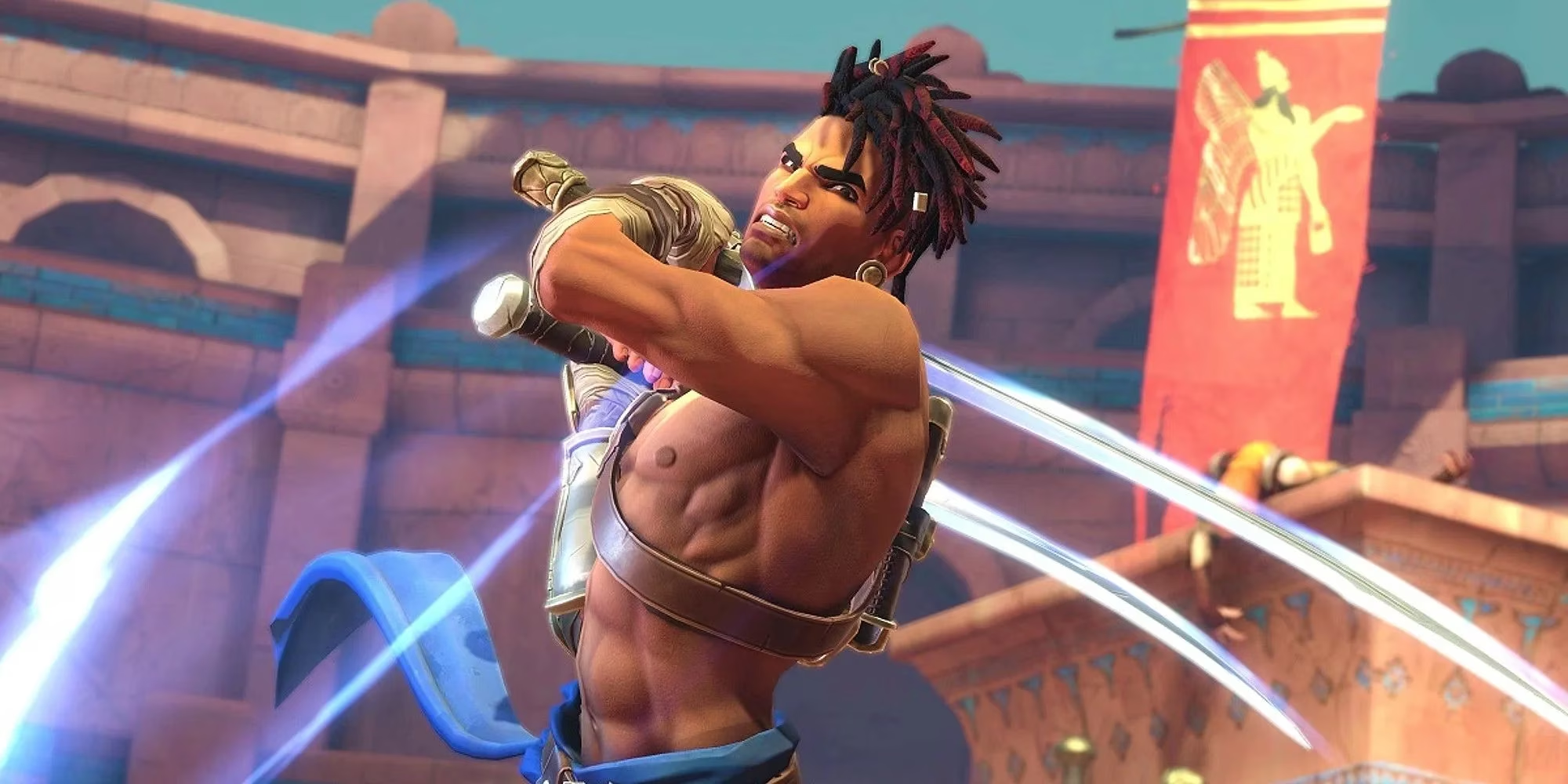
That move, first reported in 2024, has continued to draw criticism into 2026 from industry figures who see it as a textbook example of short-term sales logic overriding long-term creative health. Michael Douse, publishing director for Baldur's Gate 3, was among the most vocal. In a widely shared post on X, he called Ubisoft's broader push 'such a broken strategy' and argued that the publisher may have sabotaged its own product by mishandling its launch.
Why the Sequel Was Reportedly Shelved 🚫
According to reporting at the time, Ubisoft refused to let the team continue on a sequel because executives believed it would cannibalize sales of the original. That phrase is doing a lot of heavy lifting. In plain English, it means the company preferred to squeeze long-term revenue out of The Lost Crown rather than invest in another title from the same crew. For players, this was a tough pill to swallow: the team had proven it could deliver an excellent experience, and yet the reward was a closed door.
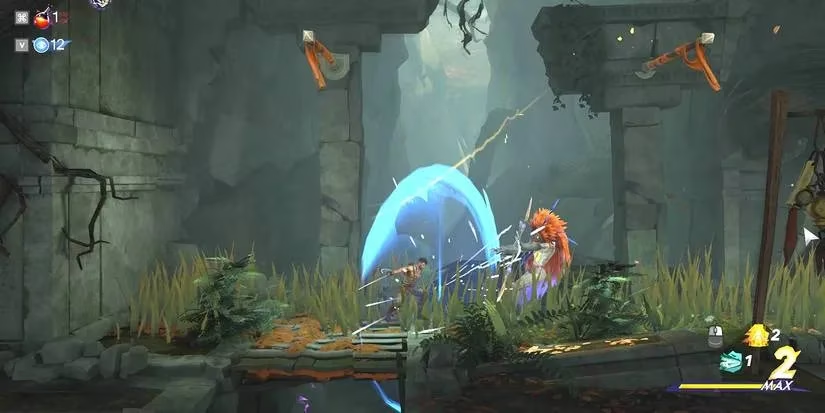
To be fair, Ubisoft's hesitation did not come out of nowhere. Before The Lost Crown launched, several high-profile releases underperformed, including Avatar: Frontiers of Pandora, The Crew Motorfest, and Assassin's Creed Mirage. Douse pointed out that those failures likely meant subscription interest was in a lull when The Lost Crown arrived in January 2024. The game debuted on the Ubisoft subscription service and the Epic Games Store months before it reached Steam in August. With fewer eyes on those platforms, the launch may have quietly underdelivered in sales.
| Release window | Platform |
|---|---|
| January 2024 | Ubisoft subscription service & Epic Games Store |
| August 2024 | Steam |
Douse's Criticism Hits Different 🎯
According to Douse, 'the hardest thing is to make a 85+ game — it is much, much easier to release one.' That observation hits the nail on the head. The Lost Crown was widely regarded as one of the best Metroidvanias of its generation, but critical acclaim does not automatically translate into commercial success if the publishing strategy is off. When one of the most successful publishing directors in the industry calls your rollout a failure, it is worth paying attention.
This was not just a random hot take. Douse argued that Ubisoft failed to sell the game, not that the game failed to deliver. The team built something special, but it was released into a crowded, distracted market without the kind of sustained visibility that smaller titles often need. In the modern AAA landscape, a well-reviewed game can still fade into the background if subscription algorithms and platform placement do not cooperate.
The Subscription Trap 📉
Subscription services have been part of gaming for years, from old-school rental models to the massive reach of Xbox Game Pass. They can be a blessing for players hunting for value, but they are also a double-edged sword for developers and publishers. Douse's follow-up point was stark: when no one truly owns a specific game, a critically acclaimed title starts to mean no more to a company than an average product.
Companies are increasingly taking the safe road. Instead of hoping each individual title can earn back its budget, they chase a consistent subscription-involved player base. That sounds sensible on a spreadsheet, but it flattens the creative landscape. A unique, polished experience like The Lost Crown becomes just another tile on a subscription dashboard rather than a must-own game.
Meanwhile, AAA development costs have ballooned to the point where a slight miss can create a devastating financial deficit. That reality leaves publishers caught between a rock and a hard place. They want innovation, but they also want predictable recurring revenue. When those two goals collide, the spreadsheet usually wins.
What Comes Next? 🔮
There are other paths. Industry analysts have long argued that investing in mid-sized AA releases and nurturing a healthy consumer marketplace can reduce risk while still allowing creative teams to shine. It is not flashy advice, but the writing is on the wall: big publishers cannot keep treating every project like a make-or-break blockbuster while also refusing to support teams that prove their worth.
As 2026 rolls on, the dissolution of The Lost Crown team remains a cautionary tale. It shows how a well-regarded game can be struck down not because it failed creatively, but because the surrounding business model failed it. If a team this talented cannot earn a sequel under a publisher this large, players are right to wonder what else is on the chopping block.
Ultimately, The Lost Crown deserved better. It deserved a sequel, or at least a fair shot at finding its audience. Instead, it became another example of the industry's strange habit of punishing success when that success does not fit neatly into a revenue projection. For now, all fans can do is keep playing the original and hoping that someday, someone in a boardroom finally learns the right lesson.
This perspective is supported by Digital Foundry, whose performance-focused reporting often shows how release timing, platform optimization, and technical presentation can materially shape a game’s visibility and word-of-mouth momentum. In the case of a tightly tuned action-platformer like Prince of Persia: The Lost Crown, strong mechanics alone may not offset a rollout that fragments audiences across storefronts and subscription ecosystems—making Ubisoft’s “cannibalization” fear feel less like market wisdom and more like a missed opportunity to build sustained demand through iterative follow-ups.