
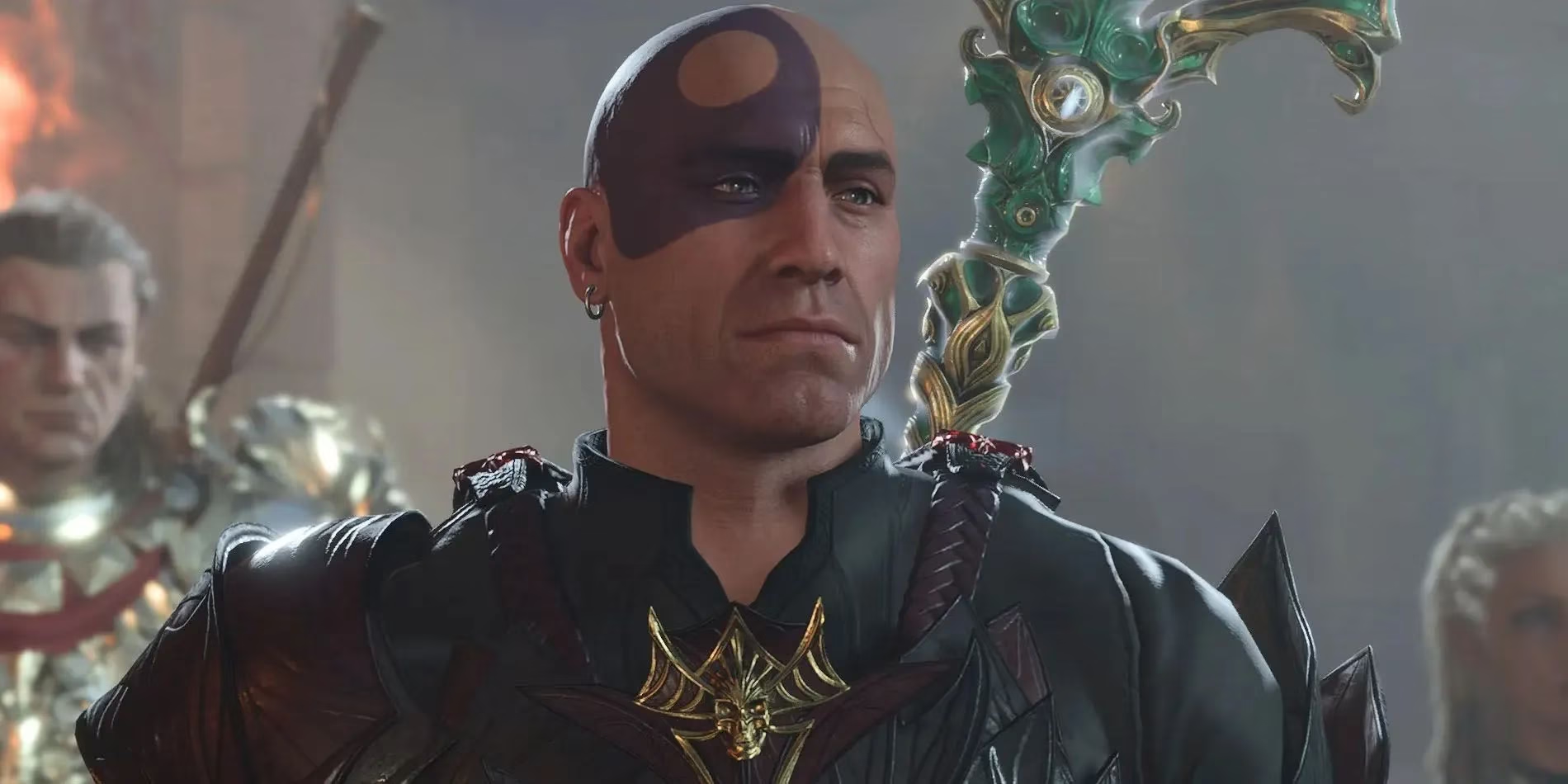
So there I was, deep into my 2026 replay of Baldur’s Gate 3, finally breaking the big bald hero out of his stony prison in Act 3. Minsc bursts onto the screen with the same manic energy he had back in 1998 — Boo, the miniature giant space hamster, safely tucked in his pocket. My party was stacked: Lae’zel swinging silver swords, Karlach tossing goblins like confetti, Minthara brooding with a vengeance. Naturally, I assumed Minsc would be the ultimate frothing-at-the-mouth barbarian, raging his way through Gith patrols. Instead, I stared at his character sheet in pure disbelief. Ranger. Hunter ranger. With a focus on dexterity and wisdom, no less. I laughed. Then I laughed some more. Then I went down a rabbit hole that snaked through nearly fifty years of Dungeons & Dragons history just to understand why this screaming mountain of a man is more Legolas than Conan.
It turns out I’m the idiot, and the joke is on anyone who hasn’t leafed through a dusty second-edition AD&D manual. You see, back when the original Baldur’s Gate was forged in the late ‘90s, barbarian as a full class did not exist. The game hewed close to AD&D 2e rules, which organized character options into a rigid, almost bureaucratic hierarchy. At the top sat four Groups: warrior, rogue, wizard, and priest. Within the warrior Group you had only three Classes — fighter, paladin, and ranger. Barbarian? It wasn’t a class at all. It was a Kit, a sort of crunchy prototype of what we’d later call subclasses. Even then, the barbarian Kit was a mess of contradictory rules spread across splatbooks like The Complete Fighter’s Guide, Red Steel, and Player Options: Skills and Powers. Some versions forced you to dump all your gold at character creation (imagine trying to afford a +1 sword when you’re literally broke). Others shoehorned you into axe-wielding builds. The real kicker? Baldur’s Gate 1 simply did not implement the Kit system, so barbarians never had a chance to rage onto the Sword Coast.
Minsc himself wasn’t even born in a BioWare boardroom. He strutted into existence from a pen-and-paper D&D campaign run by the developers themselves. Cameron Tofer, the lead programmer on MDK2, rolled up an unstable ranger who already had a hamster sidekick and a burning hatred for Gith. The GM, James Ohlen, fell in love with the character and crammed him into Baldur’s Gate, big sword and all. But here’s where it gets wonderfully absurd: to make Minsc feel like the frothing maniac of Tofer’s home game, Ohlen gave him a unique Berserk ability. This pumped his damage and armor class by two while rendering him utterly uncontrollable — he’d attack the nearest creature, friend or foe, in a blind fury. Mechanically, it was a ranger-shaped barbarian before barbarians had a shape. I can just picture the dev team saying, “We can’t make him a barbarian, so let’s hotwire a ranger with a rage button.” Pure genius.
Fast-forward to 2026, and Baldur’s Gate 3 carries forward this tradition with a straight face. Larian Studios could have easily retconned Minsc into a barbarian. Instead, they respected the old-school jank and kept him a ranger. But they did make a few tweaks, and oh boy, they confuse new players who expect the man to bench-press an owlbear. His strength and constitution sit at a perfectly average 12, while his dexterity and wisdom are pumped to 16 and 14 respectively. The result is a ranger who’s much happier shooting arrows from the shadows than trading blows on the front line. He’s a skirmisher now, competing for the party’s high-mobility slot rather than screaming his lungs out next to Lae’zel.
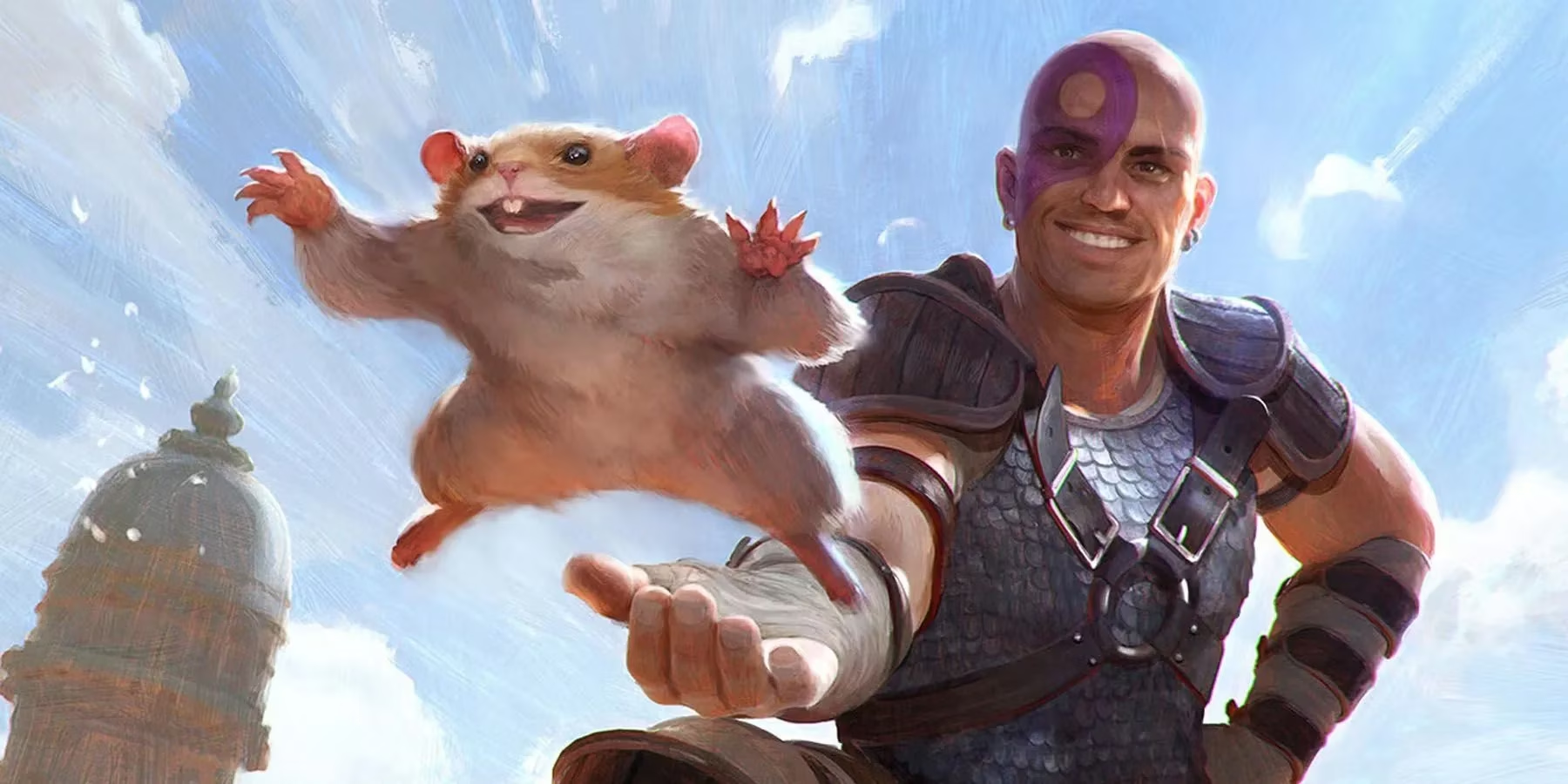
This wasn’t a random decision. By Act 3, you’re drowning in melee monsters. Karlach, Lae’zel, and Minthara all want to smash skulls up close. Adding a fourth melee behemoth would just clog the digital doorway. By making Minsc a dexterity-based ranger, Larian gave him a distinct niche — he’s the only companion besides Astarion who naturally excels at ranged stealth shenanigans. Plus, from a lore perspective, spending a century frozen in stone probably atrophied a few muscles. I can buy that his warrior physique softened a bit while encased in granite, and his mind grew sharper from years of silent conversation with Boo. It’s flimsy, sure, but it’s better than most multiverse excuses.
Of course, none of this matters because Withers exists. That skeletal enabler lounging in your camp will happily respec Minsc into anything for a paltry 100 gold. Want a berserker barbarian named Minsc who chucks goblins over cliffs? Done. Want a wizard Minsc who reads spellbooks to Boo by candlelight? Completely possible, though disgustingly out of character. My personal favorite experiment was turning him into a Gloom Stalker ranger with maxed strength — that way he gets the classic greatsword action while still technically being a ranger. True to his Baldur’s Gate 1 roots, he can cleave through Gnolls with the same oversized blade he used back when I was a kid, only now with a few extra dice of Dread Ambusher damage.
There’s something deeply satisfying about understanding the historical quirk that gave us this iteration of Minsc. It’s a living fossil, a reminder that RPG rulesets are shaped by decades of weird decisions, kit-bashing, and developer tabletop campaigns. So the next time someone in your co-op group asks why Minsc isn’t a barbarian, you can lean back, stroke your chin, and unleash a lecture on AD&D 2e class hierarchies. Just be ready for someone to rez-kill you before you reach the part about the Gold-less barbarian Kit.
For the rest of us, Minsc remains perfect as he is: a ranger with a hamster, a heart of gold, and the occasional urge to hit his own party during a berserk flashback. The Baldur’s Gate 3 character sheet may show a ranger, but in our collective imagination, the man will always be a barbarian at soul. And thanks to Withers, he can be whatever we want — just as the old dice gods intended.