
In the rich and perilous realms of Baldur's Gate 3, the drow stand as one of the most captivating and potent ancestries a player can embody. These dark elves, with their stark gray complexions and pale manes, are blessed with innate magical gifts and piercing darkvision, making them formidable adventurers. Yet, beneath this unified exterior lies a profound and ancient division. When creating a custom character, players are presented with a choice that defines not just mechanics, but destiny itself: the path of the Lolth-sworn or the way of the seldarine. This choice, rooted in eons of divine conflict and societal strife, shapes how the world perceives the character and the stories they will unravel.
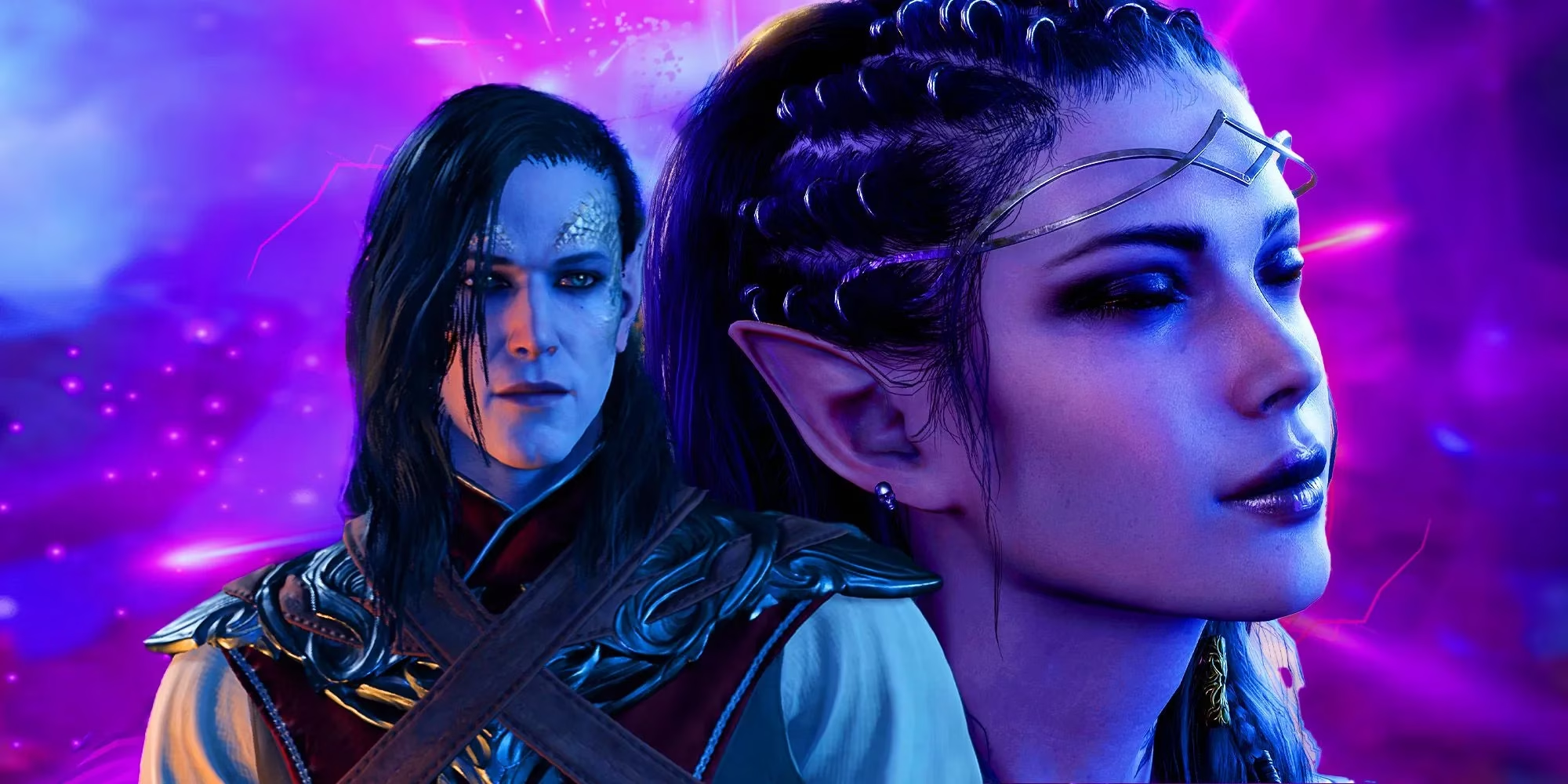
The Divine Schism: Corellon, Lolth, and Eilistraee
The rift between the two drow lineages is not a matter of recent politics but a chasm carved by divine betrayal. The saga begins with Corellon Larethian, the revered progenitor deity of all elves. He was wed to Aruashnee, a being whose ambition would reshape history. Consumed by a lust for power—whether to claim Corellon's throne or elevate her own followers—Aruashnee orchestrated a treacherous coup. The conflict culminated in Corellon's death and Aruashnee's own defeat. Cast into the chaotic depths of the Abyss, she was transformed into the Spider Queen, Lolth.
From this cosmic tragedy emerged a beacon of hope: Eilistraee, Lolth's own daughter. Horrified by her mother's path, Eilistraee dedicated herself to guiding Lolth's lost children back toward the light, melody, and communal warmth that Corellon once represented. This pivotal moment created the foundational split:
-
The Lolth-Sworn: Those who embraced the Spider Queen's ruthless doctrine of strength, deception, and dominion, fully becoming the drow as feared by the surface world.
-
The Seldarine: Those heeded Eilistraee's call, seeking redemption and a return to the older, more benevolent ways of the elven pantheon, known as the Seldarine.
While they share the iconic drow physique, a subtle distinction often marks them: Lolth-sworn drow frequently bear crimson, piercing eyes, while seldarine drow possess eyes of luminous white or silver.
Societies in Shadow: Life in the Underdark
The philosophical and divine schism manifests in utterly disparate ways of life within the sunless expanse of the Underdark.
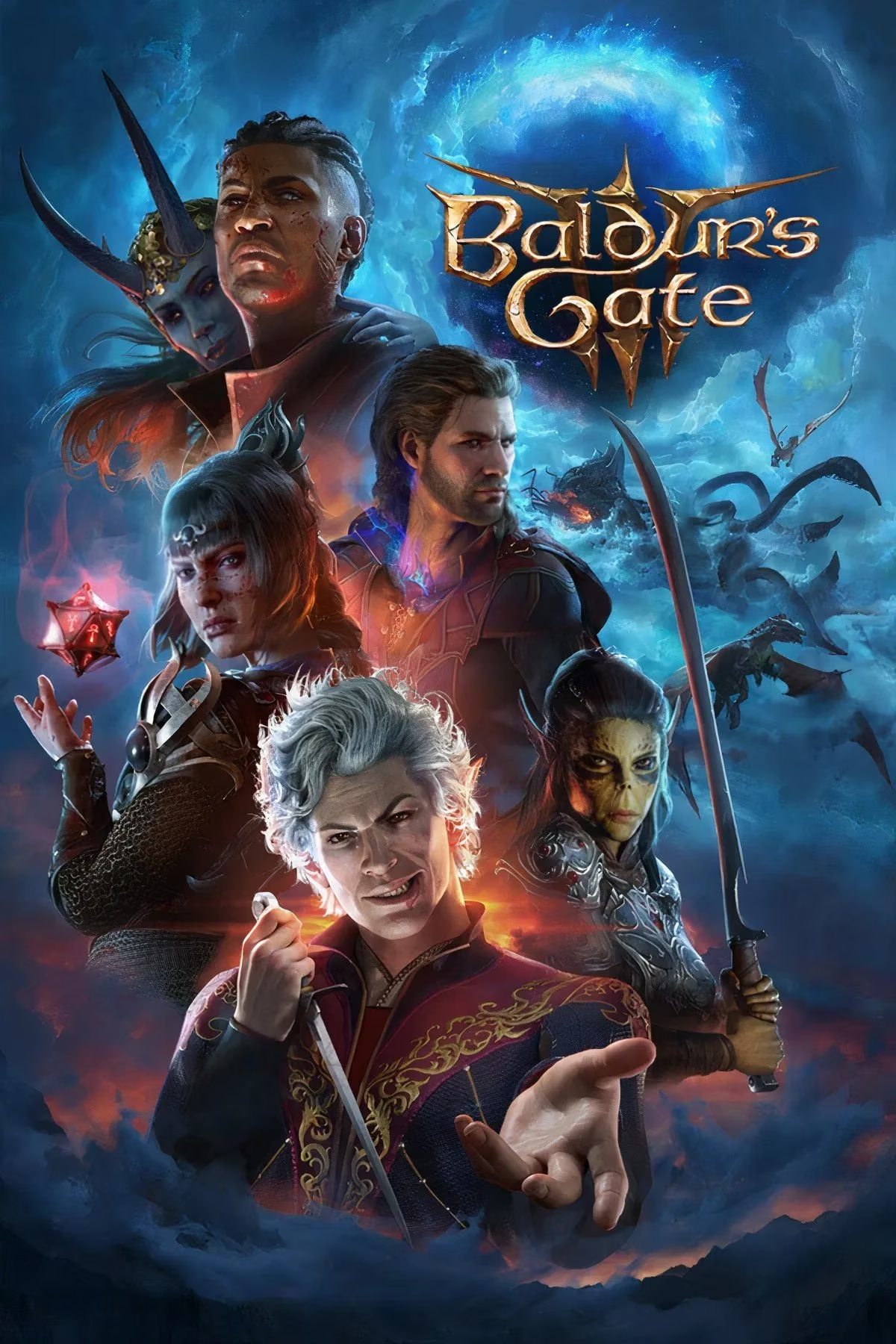
The Lolth-Sworn Drow have built a formidable, centralized empire. Their heart is the great city of Menzoberranzan, a sprawling metropolis where the worship of Lolth is absolute and her priestesses wield ultimate authority. Society is a rigid, matriarchal hierarchy obsessed with power, where strength is proven through intrigue, assassination, and conquest. While not every individual is inherently vile, their culture glorifies raiding the surface world and other Underdark enclaves for slaves and resources, cementing their terrifying reputation. Notable figures like the ruthless paladin Minthara in Baldur's Gate 3 exemplify this indomitable, often merciless, ethos.
The Seldarine Drow, in stark contrast, are a scattered and resilient people. They possess no single capital like Menzoberranzan. Instead, they form smaller, isolated enclaves or seek refuge on the surface. Their existence is defined by resistance—against the overwhelming might of their Lolth-sworn kin and against the prejudice their shared visage invites. They worship Eilistraee, the goddess of song, moonlight, and swordwork, or occasionally Corellon himself. Their struggle is not for domination, but for survival and the hope of reconciliation. This divergent path is symbolized in-game by artifacts like the enchanted longsword  Phalar Aluve, a weapon associated with Eilistraee's faithful.
A World of Fear and Misunderstanding
The year 2026 finds the realms of Faerûn still grappling with the legacy of the drow. For a player navigating Baldur's Gate 3, the choice of subrace directly shapes social interactions in a profound way. Surface dwellers, especially in frontier regions like those in Act One, react to any drow with immediate suspicion and fear. Their experiences have been shaped by the brutal raids of the Lolth-sworn.
This universal prejudice creates a unique role-playing dynamic:
-
Playing as a Lolth-Sworn Drow: Dialogue options often lean into themes of intimidation, superiority, and violent conquest. The character can embrace their fearsome heritage, using it as a tool or challenging it from within.
-
Playing as a Seldarine Drow: A significant portion of the game involves the character constantly clarifying their identity. "I am not one of them," becomes a recurring refrain. They must actively work to dissociate themselves from the sins of their Lolth-sworn cousins, seeking to prove their peaceful or noble intentions through actions.
This narrative device brilliantly highlights that the internal conflict between the drow factions is largely unknown or misunderstood by the common folk of the Forgotten Realms. To most, a drow is simply a drow—a harbinger of danger from the deep places.
The Enduring Conflict and Player Agency
While the central plot of Baldur's Gate 3 does not focus exclusively on the drow civil war, it provides a rich, immersive backdrop for character development. The conflict between the seldarine and the Lolth-sworn simmers in the background, offering players a chance to explore themes of:
-
Nature vs. Nurture: Can one escape the destiny of their birth and culture?
-
Redemption: What does it mean to seek a path of light when born into darkness?
-
Identity: How is identity forged in opposition to a monstrous stereotype?
Choosing a drow character, therefore, is not merely a statistical decision for superior darkvision or free Dancing Lights spells. It is an invitation to engage with one of the most complex and tragic schisms in fantasy lore. Whether one walks the path of the ruthless Spider Queen's devotee or the hopeful follower of the Dark Maiden, the journey is sure to be fraught with unique challenges, deep-seated prejudices, and opportunities to define what it truly means to be a drow in a world that fears the very shadow they cast.