
Let me tell you something straight up: it's no secret that the RPG landscape has changed dramatically since the '90s. Back then, these games were complex beasts, dense with mechanics and systems that demanded your full attention. Over the years, we've seen a trend of simplification, a sort of 'watering down' to appeal to a broader audience. While this has brought more players into the fold, it has, let's be real, left some die-hard fans of the classics feeling a bit... shortchanged. It's a sentiment that resonates deeply with me, especially when I look at the current state of the genre. However, I recently had my perspective reinvigorated after diving into some insights from The Elder Scrolls co-creator, Ted Peterson. He's not just observing this trend; he's actively challenging it with his upcoming project, The Wayward Realms, and he believes the massive success of Baldur's Gate 3 is a clear sign that players are ready for a change. It seems the appetite for deep, consequential choice and true freedom is making a major comeback.
In a candid interview with Video Gamer, Peterson didn't mince words about his feelings towards modern RPG design. "I don’t like how linear and small, small certainly for the game world and the sandbox I’m playing in, [RPGs can feel], how linear the storyline is, how forced you are into it," he stated. This hit home for me. So many games nowadays feel like they're on rails, offering the illusion of choice while funneling you towards a predetermined conclusion. Peterson's vision is different. He's aiming to recapture that magic of genuine exploration and player agency. "I was hoping that we were gonna change that and make the game more fun for someone like me who wants to play the game in different ways," he added. This isn't just nostalgia talking; it's a design philosophy centered on respect for the player's intelligence and creativity.
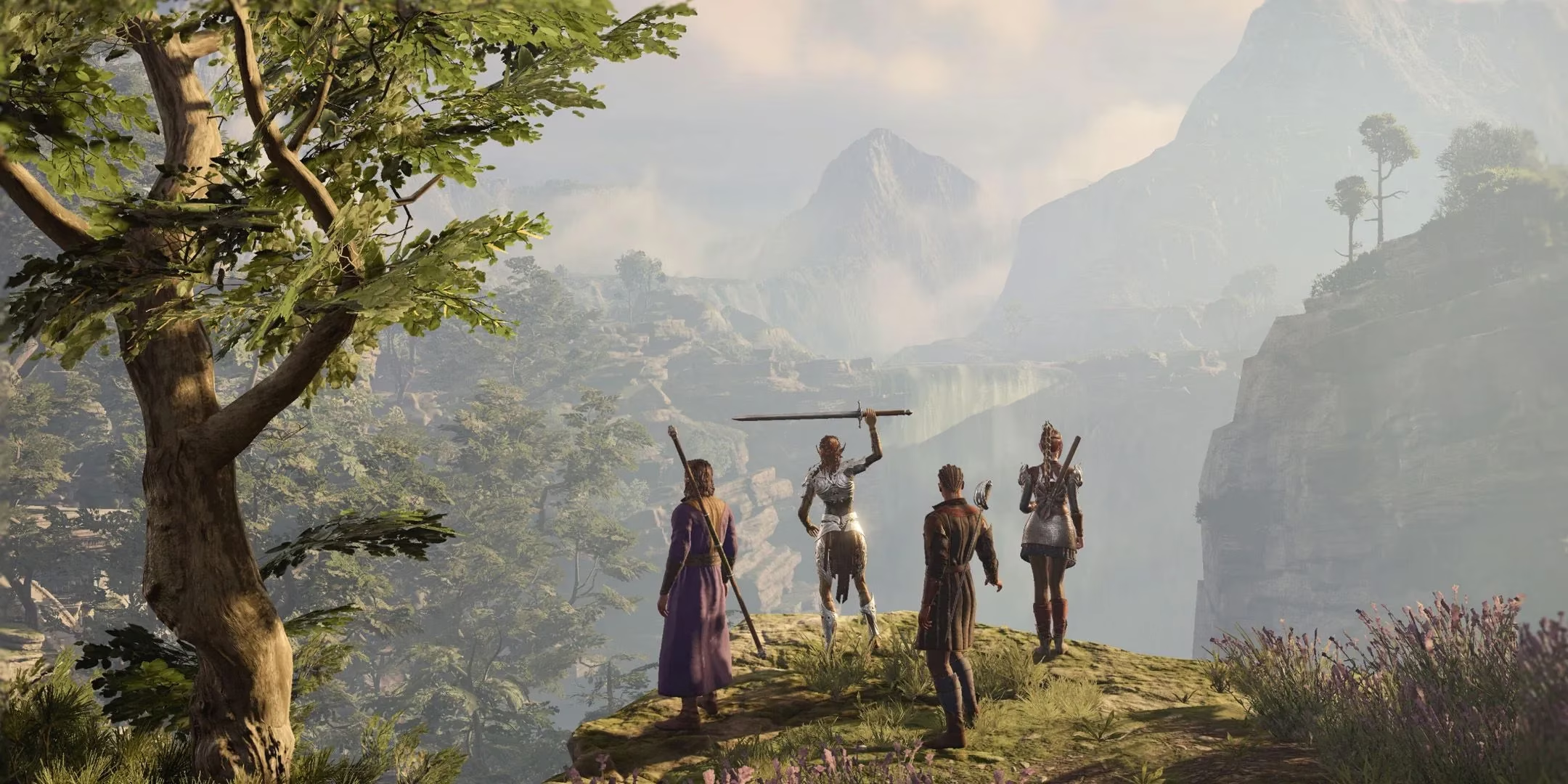
The proof, as they say, is in the pudding—or in this case, the phenomenal success of Baldur's Gate 3. That game was a wake-up call for the entire industry. It proved, beyond a shadow of a doubt, that a complex, systems-driven RPG with unparalleled player freedom could be a monumental commercial and critical hit. Peterson sees this as a pivotal moment. "I’m glad that people are wanting to break away from that," he said, referring to linear design. "I’ve seen games that have attempted it and were trying to break down the fence completely. For me, I’ll always go on the side of freedom." Baldur's Gate 3 didn't just break down the fence; it showed players a vast, open field on the other side, and now everyone wants to run in it.
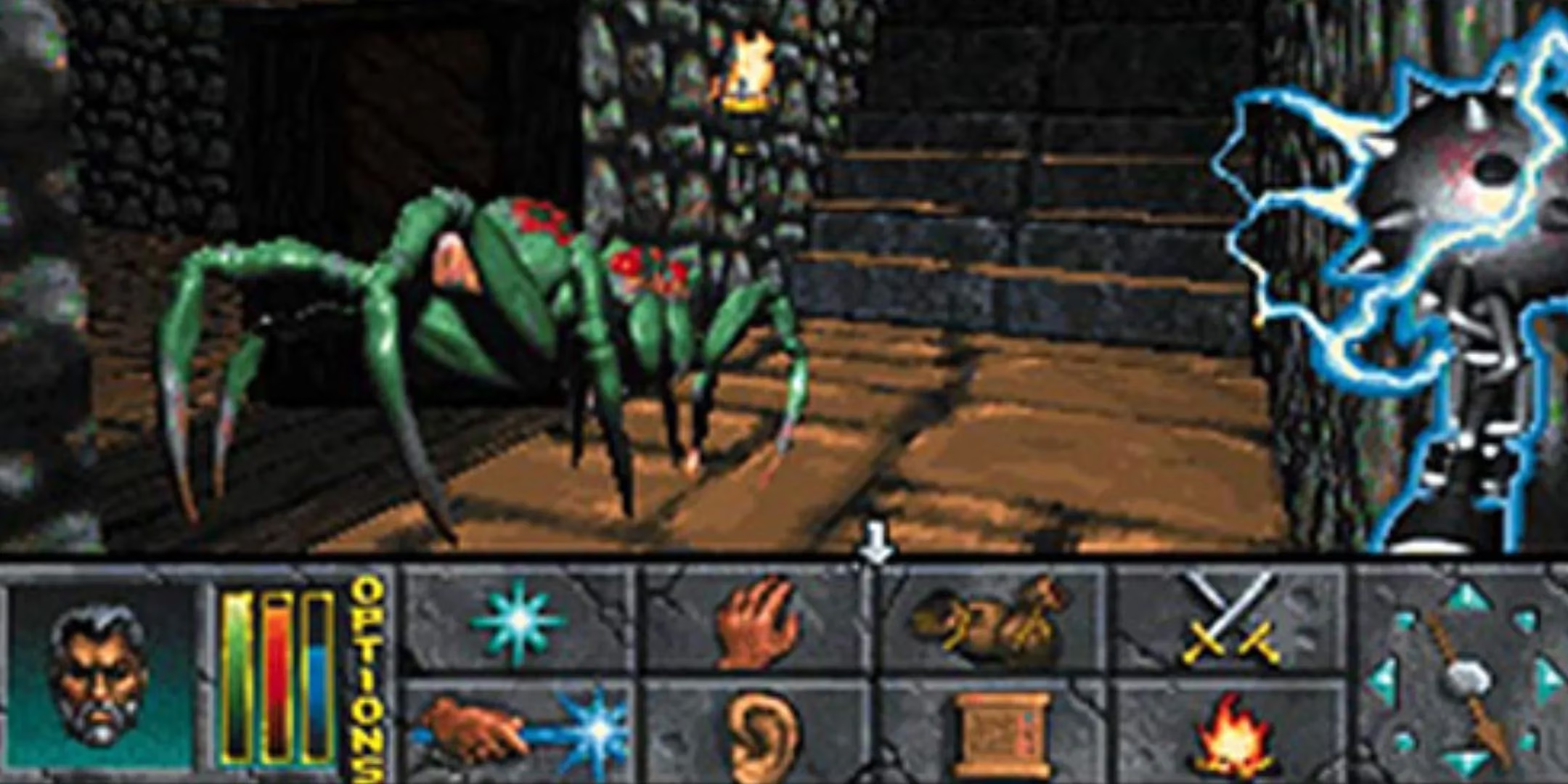
This brings us to Peterson's current labor of love: The Wayward Realms. This project is being positioned as nothing less than a spiritual successor to the first two Elder Scrolls games, Arena and Daggerfall. For those who remember (or have heard the legends), those games were infamous for their sheer scale and unforgiving depth. They were worlds you could truly get lost in, for better or worse. The Wayward Realms seeks to channel that same ethos for a modern audience, promising a vast, simulated world where player choices have profound, cascading effects. It's a bold ambition in 2026, a year where many AAA titles still prioritize cinematic spectacle over systemic depth.
What does this mean for us, the players? It signals a potential renaissance for the hardcore RPG. Here’s what a game built on these principles might offer:
-
Non-Linear Storytelling: Quests and narratives that branch meaningfully based on your actions, reputation, and skills. No two playthroughs should be the same.
-
Systemic World Simulation: NPCs with their own schedules, economies that react to supply and demand, and factions that remember your allegiances (and your betrayals).
-
True Consequence: Choices that lock you out of content, create new opportunities, or alter the political landscape of the game world permanently.
-
Deep Character Customization: Moving beyond cosmetic skills to builds that fundamentally change how you interact with every system in the game.
Of course, with great freedom comes great... uncertainty. The Wayward Realms currently has no firm release date and is only confirmed for PC. The team at OnceLost Games has a monumental task ahead: building a world that feels alive and reactive without collapsing under the weight of its own ambition. It's a high-wire act, but one that has suddenly found a massive and eager audience thanks to Larian Studios' groundbreaking work.
As I look at the gaming horizon in 2026, I feel a genuine sense of excitement. The success of Baldur's Gate 3 wasn't a fluke; it was a market correction. Players have voted with their wallets, and the message is clear: We want depth. We want agency. We want our choices to matter. Ted Peterson and the team behind The Wayward Realms are not just listening to that message; they're aiming to build a whole new world around it. It's a throwback with a forward-looking vision, and honestly? I'm here for it. The era of the passive, cinematic RPG experience is being challenged, and the champions of player freedom are leading the charge. Let's see where this path takes us. 🤘