
In 2026, the debate over what makes a video game trilogy still smolders like a campfire that refuses to die. It began with a simple question: does three games in the same series automatically equal a trilogy? A writer at TheGamer threw that grenade into the comments section, and the explosion was glorious. The answer, as it turns out, is about as slippery as a greased pig at a county fair. A trilogy comes from the Greek treis or Latin tres for three, but etymology is not destiny. Just ask anyone who has tried to argue that Baldur's Gate, Baldur's Gate 2, and Baldur's Gate 3 form a neat trilogy. 🎮
Sure, there are three Baldur's Gate games, and each one is a critical darling. But the first two belong to a different era, a different developer, a different audience, and a very different style of play. Baldur's Gate 3 is at best a legasequel, a distant cousin who shows up to the family reunion with a new accent and a Game of the Year trophy. It shares a name, not a soul. That is not a trilogy; that is a reboot wearing a trilogy's hand-me-down coat. It is apples and oranges, after all.
Star Wars offers a cleaner template. Nine mainline movies, yes, but they branch into three distinct trilogies. Each trio shares a core narrative that is built, grappled with, and resolved. Each was made in the same era with the same general presentational style, and each features the same cast. The Empire Strikes Back, Return of the Jedi, and The Force Awakens are not a trilogy; they are a mismatched buddy cop movie waiting to happen. The proof is in the pudding: a trilogy needs more than a shared logo.
Mass Effect vs. Dragon Age: A Tale of Two BioWare Series
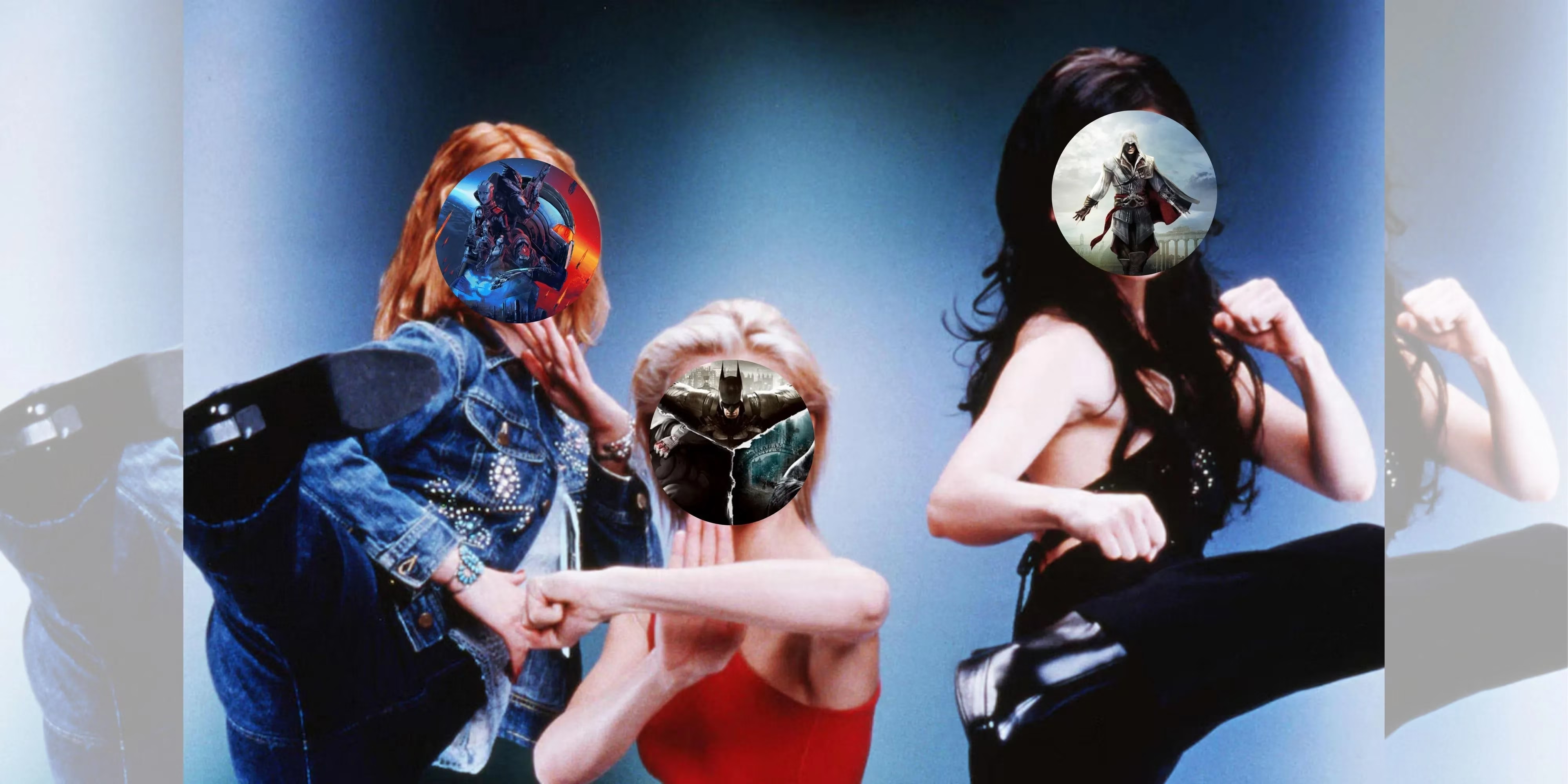
Mass Effect is the gold standard. Commander Shepard and their crew face the Reapers across three games. The story builds, grapples, and resolves. The ending is a bone of contention, and it makes the trilogy fight for its place at the top, but it is undoubtedly a great trilogy. One cohesive, if sprawling, narrative told over three entries. You can feel the throughline like a pulse.
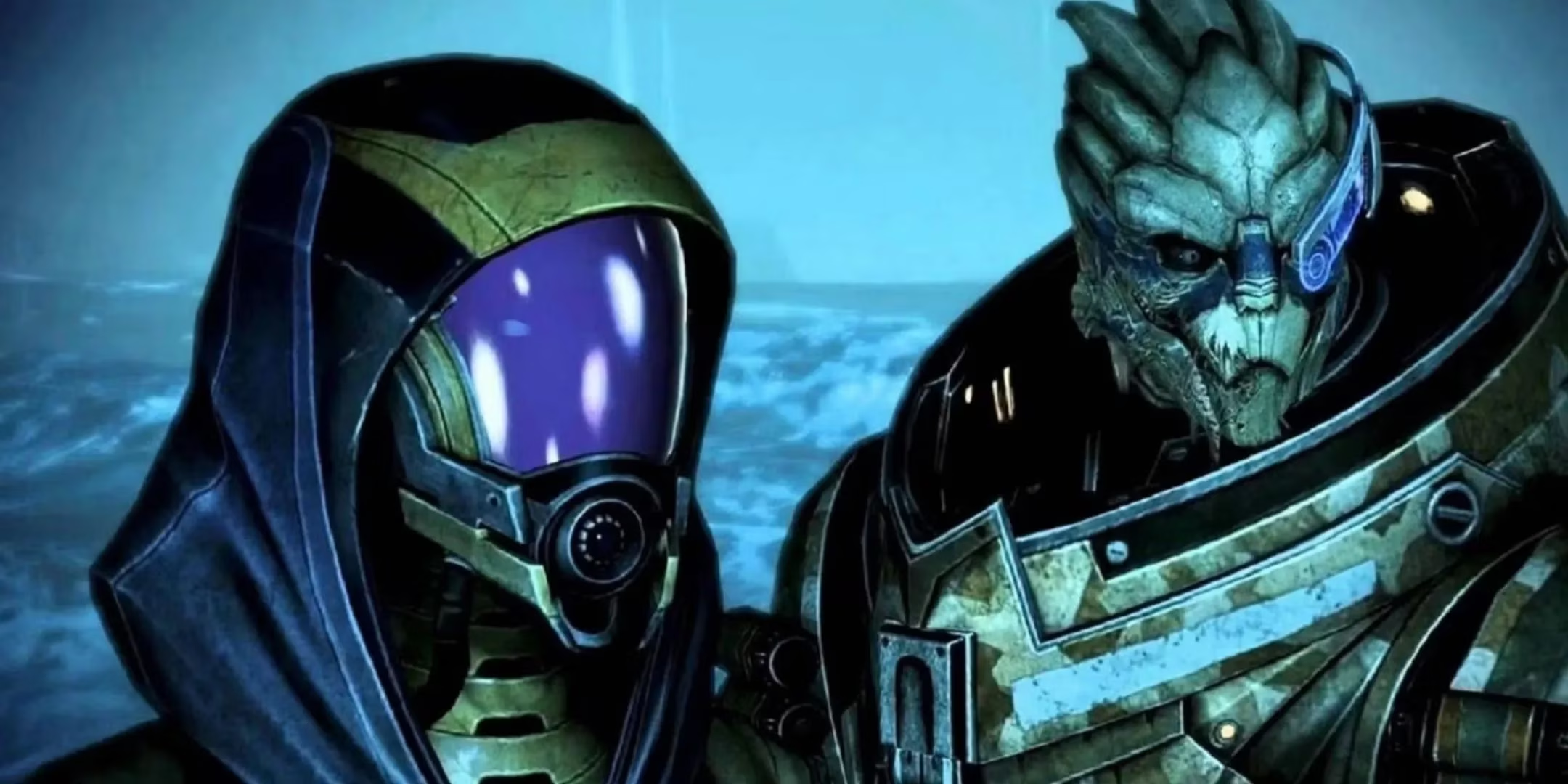
Dragon Age, Mass Effect's cousin, is a horse of a different color. There are three games, and they follow chronologically, but they feel too much like standalone experiences. The arrival of The Veilguard in 2024 did not change that. In fact, despite Inquisition and The Veilguard suffering from a decade-long gap and a BioWare clearout, both are concerned with Solas's plan. That makes The Veilguard appear to be the first true Dragon Age sequel. A third game focused on Solas or the direct outcome of his unleashing the gods might count as a trilogy, but there are a lot of maybes in that equation. At the end of the day, maybes do not make a trilogy.
Halo, Assassin's Creed, and the Power of Closure
Halo is the best example of contrast. There are many Halo games, but the first three are a true trilogy. We meet Master Chief and guide him through a storyline that, despite exciting endings to each saga, feels like one narrative spanning the trio. The fact that Halo and Master Chief continued afterwards is largely irrelevant because those first three feel like a complete experience. Closure matters.
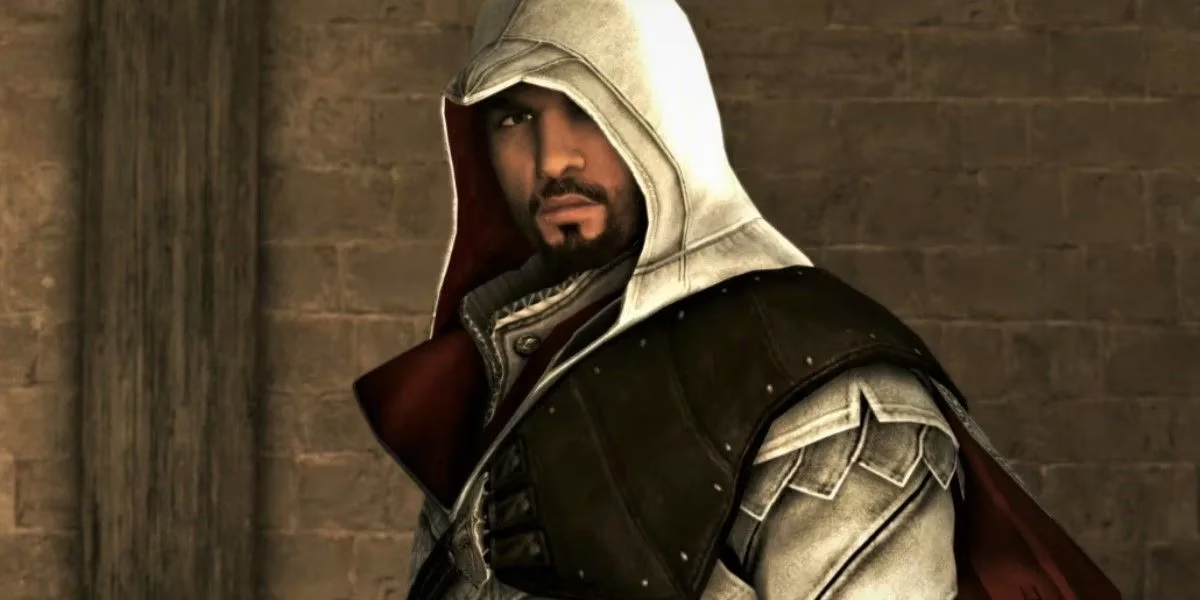
Assassin's Creed, for all its games, has just one true trilogy: Assassin's Creed 2, Brotherhood, and Revelations. They deal with Ezio Auditore, the best character the series has ever created—some might even say, the best character Ubisoft has ever created. Narrative and closure can even overcome differences in gameplay approaches. Batman: Arkham Asylum is a very different game from City and Knight, yet it is clearly a trilogy because of how it carries us through the story. The whole nine yards is there: beginning, middle, and end.
The Last of Us is trickier. Right now, the two entries are clearly linked. In The Last of Us, we play as Joel alongside Ellie. In The Last of Us Part 2, we play as Ellie and Joel's killer, Abby. For The Last of Us 3 to be a true trilogy, it would need to continue Abby's story or Ellie's story. If it were to build around Lev, it might make for a stronger game, but it would be less of a trilogy by nature of the fact that the story would lose its continued focus. What does Joel transporting Ellie across the country have to do with Lev? That is not the first rodeo for this debate, and players still do not have a clean answer.
Vibes, Teams, and the Crash vs. Spyro Test
Narrative is not everything. For a question so inconsequential, it often comes down to vibes. Crash Bandicoot's first three games comprise a trilogy. They were made close together by the same core team and offer similar yet evolving level design styles. No subsequent Crash games can be grouped in this way. Crash Bandicoot 4: It's About Time was designed to skip over the other games and continue the series in the same tone, but it does not make a quadrilogy with the originals.
Spyro, immensely similar to Crash, also has a neat three games before the series made some less wise moves. Yet it feels a little less like a trilogy. Maybe it is because Spyro goes to different realms and the cast gets broader. Maybe it is because his levels are more specifically thematic than Crash's, making the link between games harder to see. Maybe it is because Spyro has different goals in each game, unlike Crash's linear focus. Maybe it is all of these things, or none. Whatever it is, the first three Spyro games are still an experience to be enjoyed together, and many prefer that experience by a marsupial's hair to Crash. But Crash feels more like a true trilogy.
Here is a quick breakdown:
| Series | Three games? | True trilogy? | Why |
|---|---|---|---|
| Baldur's Gate | Yes | No | Different eras, developers, audiences, and gameplay |
| Mass Effect | Yes | Yes | Cohesive Reaper arc across three entries |
| Dragon Age | Yes | No | Standalone experiences, weak throughline |
| Halo | Many | First three yes | Complete narrative with closure |
| Assassin's Creed | Many | Ezio trilogy yes | Narrative and closure overcome gameplay shifts |
| Batman: Arkham | Yes | Yes | Story carries through Asylum, City, and Knight |
| Crash Bandicoot | First three | Yes | Same team, era, and evolving design |
| Spyro | First three | Sort of | Vibes are weaker, cast and goals shift |
So what actually makes a trilogy? It needs more than three games in the same series. It needs narrative, closure, and vibes. It needs a throughline that builds, grapples, and resolves. It helps if the same core team made the games close together, in the same era, with a consistent presentational style. But even then, the magic is hard to pin down. It is like nailing jelly to a wall. In 2026, with remasters, collections, and legacy sequels flooding the market, the question matters more than ever. A trilogy is a promise: three chapters, one heart. Break that promise, and you have a trilogy in name only. And that is the whole ballgame. 🎲