
Even in a realm as desolate as Faerûn, few races inspire as much unease as the drow and the githyanki. These two ancestries, plucked directly from the lore of Dungeons & Dragons, have been adapted into Baldur’s Gate 3 with all their sharp edges intact. The githyanki enjoy a central role in the narrative, thanks to the unrelenting Lae’zel and a plot steeped in their rebellion against the mind flayers. The drow, while less omnipresent, still carve out a memorable presence through characters like Minthara, a potential companion whose every remark drips with the casual cruelty of the Underdark. Observing them side by side reveals a fascinating distinction. Why do the drow, despite the githyanki’s own harsh reputation, manage to feel so much more merciless? A rare party conversation between Minthara and Lae’zel peels back the layers.
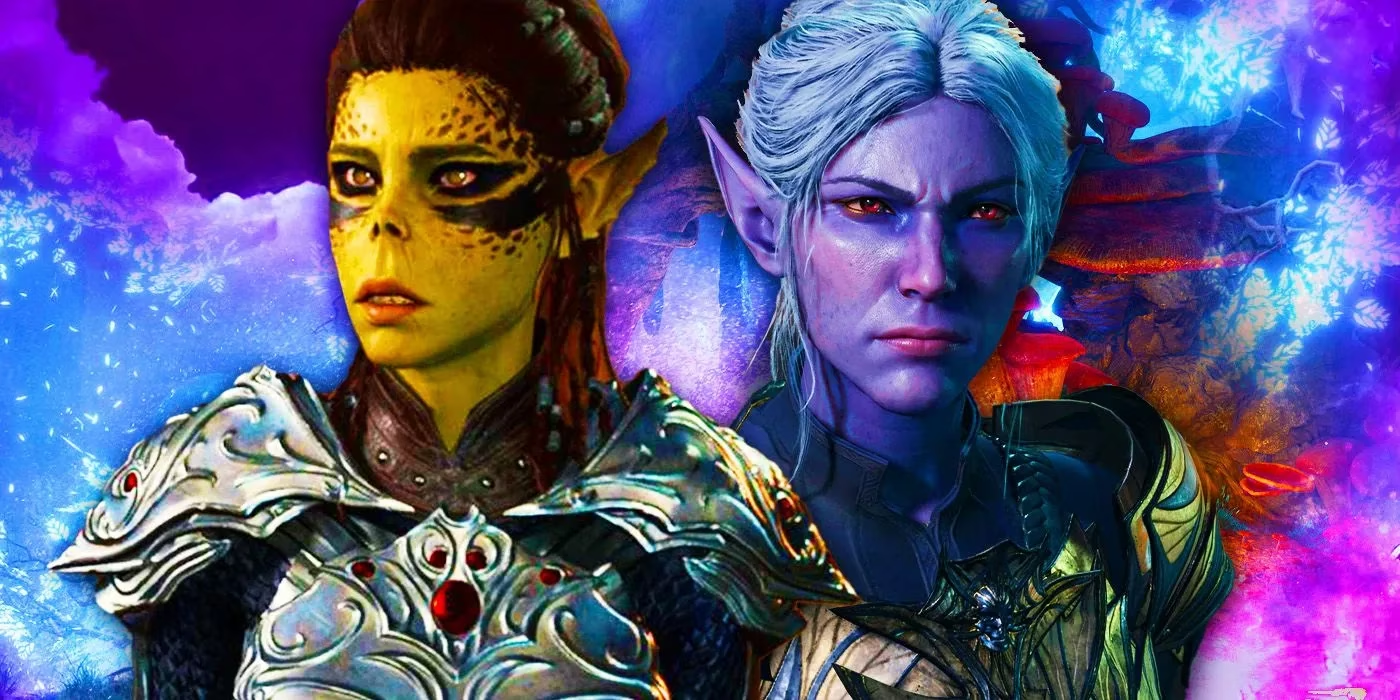
The difference becomes stark when the topic of childhood arises. While wandering the Sword Coast, companions in Baldur’s Gate 3 sometimes exchange short, semi-random banter that can illuminate their personalities. At one point, Minthara states matter-of-factly that drow children enter lethal combat the moment they can clutch a blade. The sheer impracticality of this is staggering: elves can live for centuries, so there is no biological pressure to start so early in order to accumulate fighting experience before adulthood. Lae’zel, no stranger to a militant upbringing, counters that githyanki would never squander “battle flesh before it is primed.” Her people do not pit their young against one another until the age of thirteen. That figure still shocks the average Faerûnian, but measured against the drow tradition of throwing toddlers into deathmatches, it sounds almost temperate. Could there be a darker layer? Minthara pushes further.
She reveals that drow infants are tested for poison resistance while still in the womb. The process would surely endanger both the carrier and the unborn, yet Minthara speaks of it without a flicker of emotion—as if recalling a family recipe. Even Lae’zel, whose default mode is abrasive pragmatism, recoils and utters a sharp “Tsk’va,” a githyanki curse reserved for moments of genuine disgust. The moment is jarring. Is this the same Lae’zel who often threatens violence at the slightest inconvenience? Absolutely. And yet the drow’s prenatal cruelty manages to cross a line that even she, raised in a society that culls the weak, perceives as abhorrent. The question practically asks itself: if a githyanki warrior is horrified, what must these customs look like in practice?
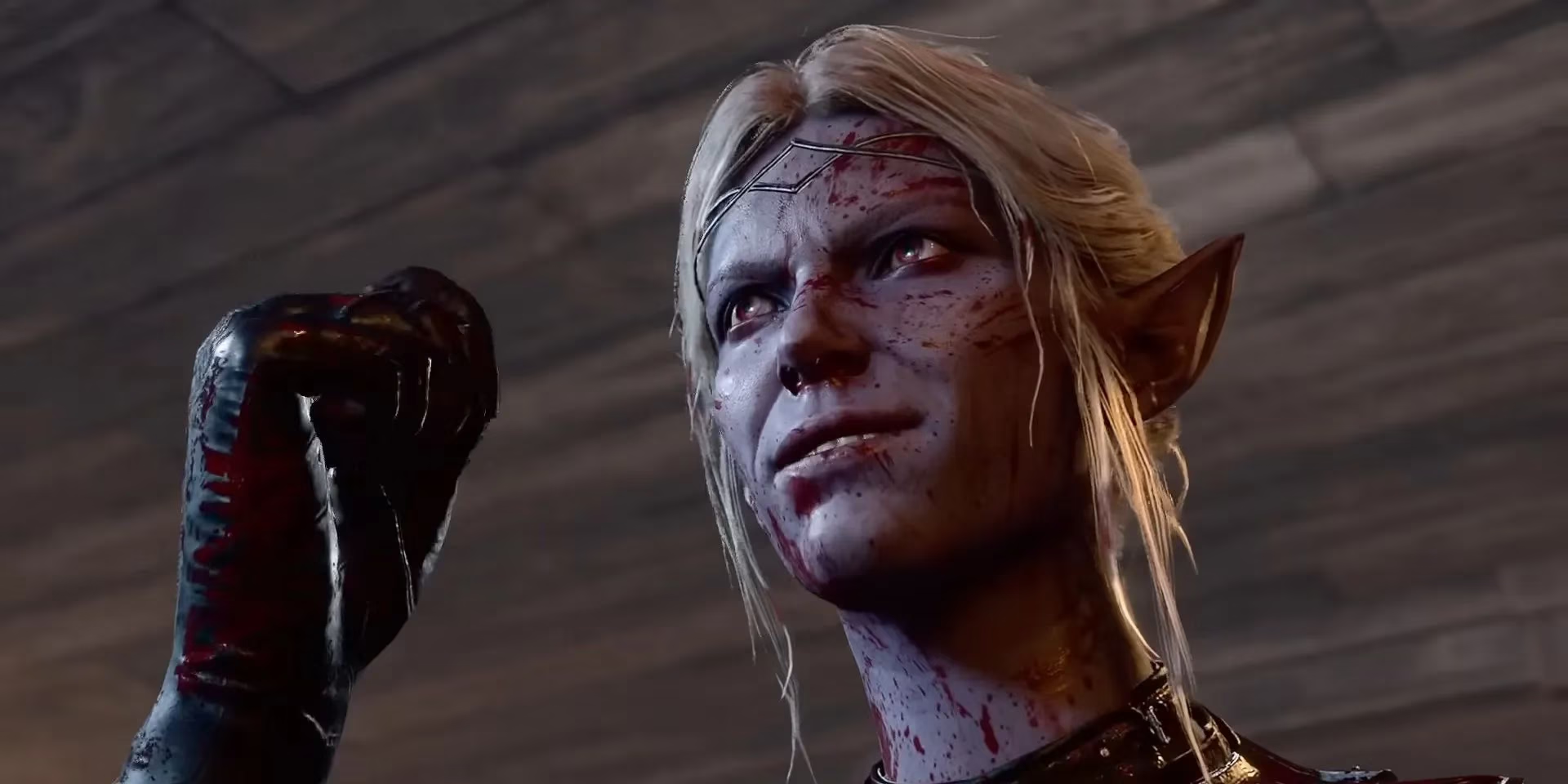
This horror is not a secret on the surface. Anyone who has played a drow protagonist in Baldur’s Gate 3 quickly learns that their reputation precedes them. Goblins tremble, refugees flinch, and even the more benevolent Seldarine drow are lumped in with their Lolth-sworn cousins. The game trusts its audience to understand that this fear is earned, not just through legends but through tangible, observable behavior. Minthara, for instance, often remarks on the fate of third-born sons. In drow society, a third male child is considered useless for combat and procreation, so the baby is simply slain. The githyanki also kill their own, but they do so to weed out the physically inadequate and forge a stronger army. The drow, by contrast, destroy a life before it has any chance to demonstrate merit, driven purely by pre-existing prejudice and a pathological need to eliminate perceived liabilities. The cruelty is not a tool for collective improvement; it is an expression of a culture that sees its own members as disposable pieces in a game of constant scheming.
The events that bridge Act 1 and Act 2 offer a microcosm of this ideological divide. In the Underdark, the drow True Soul Nere decides to execute a group of deep gnomes simply because their failure annoyed him. The act is petty and gratuitous. Nearby, in the Mountain Pass, githyanki warriors turn on each other with the explicit goal of culling the weak, yet they can be talked down, their violence reframed as a cold, purpose-driven ritual rather than a tantrum. Even the githyanki egg hidden in the crèche becomes a point of contrast. The party can persuade the caretaker to relinquish the egg, offering it a chance at a life beyond the battlefield. Is it conceivable that a drow nursery would broker such a deal? The thought is almost laughable. Drow society would view the egg—or any sign of vulnerability—as an opportunity for exploitation, not a hatchling to be rescued.
Fundamentally, the difference between these two races lies in how they function. Drow society is a labyrinth of ambition where every individual is a potential rival. Minthara remembers surviving her first assassination attempt while still a baby. The petrified drow Dhourn in the Underdark stands as a monument to this reality; he and two other drow tore each other apart in a race to reach the Adamantine Forge, each seeking power at the expense of the others. Githyanki society is rigidly militaristic. Yes, Baldur’s Gate 3 can culminate in a civil war between those loyal to Orpheus and the followers of Vlaakith, but that conflict springs from a difference in ideals—a clash over the soul of their people—rather than an endless scramble for personal ascendancy. A gith like Kith’rak Voss does not scheme so much as he maneuvers strategically for the greater doctrine he serves. The githyanki harshness is a whetstone designed to sharpen soldiers against a galaxy-spanning enemy, much like the ancient Spartan model often referenced in popular media. The drow, however, treat even their own as the enemy.
It would have been effortless for Larian Studios to paint both ancestries with the same grim brush, particularly since the drow receive far less screen time across the three acts. Instead, the writing remains loyal to decades of Dungeons & Dragons lore, insisting that these two callous cultures are callous for profoundly different reasons. The githyanki prepare their entire lives to fight mind flayers; their cruelty is a calculated pedagogy. The drow, conversely, are cruel because cruelty is the medium through which they interact with the world—scheming, poisoning, and killing from the womb onwards, not out of necessity, but out of a deep-seated conviction that mercy is the ultimate weakness. Watching Lae’zel, a warrior forged in astral fire, flinch at Minthara’s stories tells players everything they need to know.