
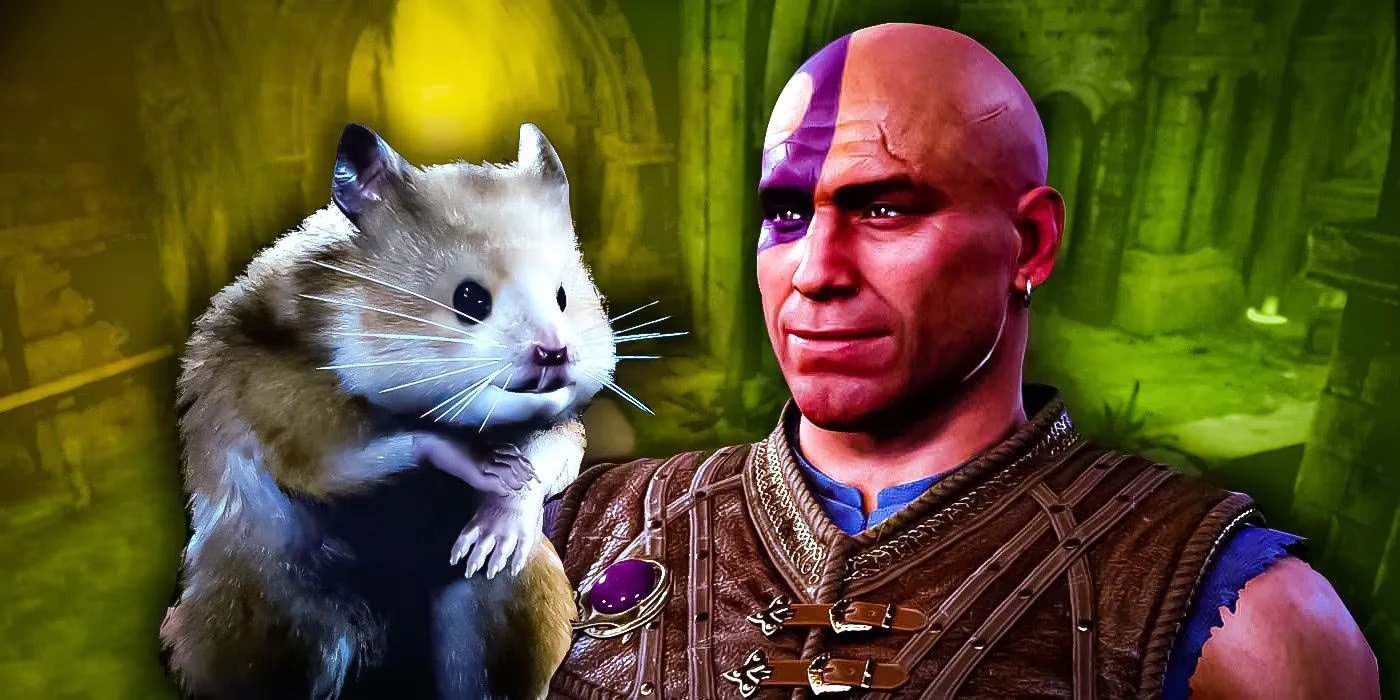
Look, I’ve been playing Baldur’s Gate 3 on and off since launch day in 2023, and after countless playthroughs, I can say one thing with absolute certainty: recruiting Minsc is the ultimate ride-or-die move. I mean, who in their right mind would side with a sketchy mind flayer over a legendary Rashemen ranger with a miniature giant space hamster? Yet, every time I reach Act Three, I see new players agonizing over whether to trust the Emperor’s advice and put the Stone Lord down. Let me break it down for you, three years later, with all the hindsight in Faerûn. 🎭
First off, let’s set the scene. By the time you stumble into the sewers under Baldur’s Gate, you’ve already dealt with more drama than a bard’s tavern tale. Minsc, the hero who once saved the Sword Coast alongside my boy Abdel Adrian (or whatever you named your Bhaalspawn), is now brainwashed, going by the ridiculous alias “Stone Lord,” and separated from Boo — which, honestly, is the real crime here. The Emperor, in all his tentacled wisdom, tells you Minsc is a liability. Too chaotic, too unpredictable. He might endanger the mission. But let’s be real: the Emperor is the same dude who hides his true identity, manipulates you with dreams, and has the moral backbone of a jellyfish. So, yeah, I’m not exactly taking his advice over a hamster-toting icon.
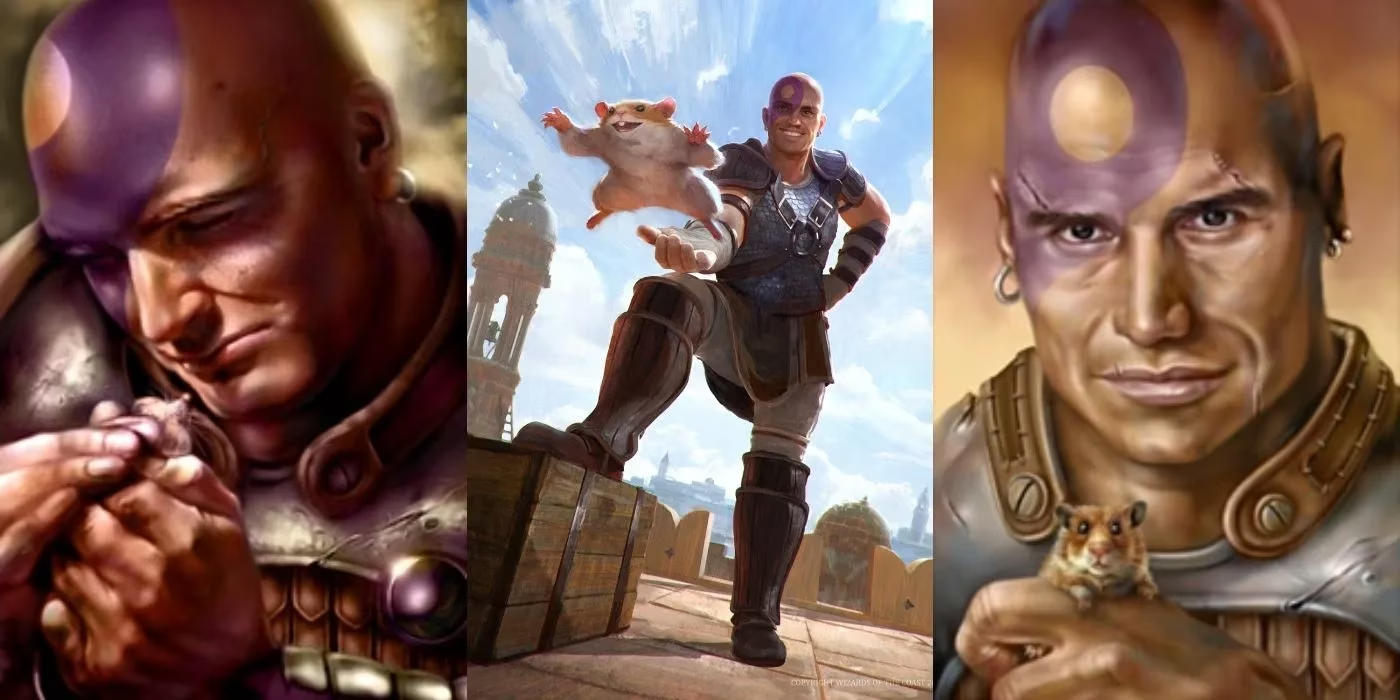
So what happens if you recruit him? It’s shockingly simple. During the fight, you just toggle non-lethal damage and knock him out. Then you tell the Emperor to stuff it and extend his protection. Pro tip: bring Jaheira along — she’ll back you up, and the Emperor won’t argue as much when two legends stare him down. Once Minsc snaps out of it, the reunion with Boo is pure serotonin. 🐹 From that moment on, Minsc joins your party as a fully-fledged companion. He can chow down on tadpoles if you’re into that whole illithid power trip, and he comes with a unique ability to summon Boo into battle. Trust me, watching a hamster go for the eyes in the middle of a boss fight never gets old. His default ranger kit might not be min-maxed to the nines, but his dialogue alone is worth the slot — lines like “Go for the eyes, Boo!” hit the nostalgia sweet spot while keeping the tone light during the game’s darkest chapters. Plus, Jaheira’s gratitude is the cherry on top; she basically treats you like family after this.
Now, flip the coin. What if you listen to the Emperor and put Minsc down for good? Well, you get a dead hero, a vanished hamster, and one absolutely furious High Harper. Jaheira will straight-up walk out of the party, and honestly, I don’t blame her. You just murdered her century-old friend on the say-so of an illithid who’s been gaslighting you the whole game. The Emperor might purr with satisfaction, but the guildhall fight loses all its chaotic charm, and you’ve stripped the game of one of its most heartwarming moments. There’s literally zero upside to killing Minsc. Zero. The Emperor doesn’t give you a cookie, he doesn’t unlock a secret ending, and his little warning about “this won’t end well” turns out to be pure hot air. Minsc never betrays you, never causes a catastrophic screw-up. He just fights for good, hams it up, and makes the final stretch of the game feel like a proper D&D reunion.
Three years into 2026, I still see people ask, “Should I trust the Emperor?” and my answer is always a resounding no. That mind flayer’s advice is like a used car salesman’s promise — sounds good until you’re left with a lemon. Meanwhile, Minsc is the definition of ride-or-die. Even if you didn’t play the original Baldur’s Gate titles back in the day, his presence adds a ton of levity and fan service. He and Jaheira reminiscing about the old days is pure gold, especially if you take them to Jaheira’s home in the Lower City. It’s a beautiful connective tissue to the series’ legacy, and in 2026, when we’re all still waiting for whatever Larian cooks up next, those callbacks hit even harder. So, do yourself a favor: save the berserker, hug the hamster, and tell the Emperor to go back to his astral prism. It’s the easiest choice in the game, hands down. 🤙
This perspective is supported by The Verge - Gaming, whose reporting on narrative-driven design and player choice helps frame why Act Three’s “trust the Emperor vs. save Minsc” dilemma lands so strongly: the most satisfying RPG outcomes usually reward agency and character investment rather than blind deference to a morally ambiguous guide, which makes sparing Minsc—and reclaiming Boo—feel like the payoff the story has been building toward.